
Ensuring Manufacturing Repeatability Through Robust and Repeatable Processes
Manufacturing Repeatability and the Importance of Repeatable Processes
Manufacturing organizations striving for predictable, high-quality output often discover that manufacturing repeatability is not achieved by accident—it is engineered through disciplined, repeatable processes. In competitive markets, manufacturers cannot rely on tribal knowledge or inconsistent practices; they must establish process stability that consistently converts raw materials into reliable products. This emphasis on manufacturing repeatability drives down defects, improves customer satisfaction, and enhances operational efficiency.
I bring this up because I have recently been spending time consulting and coaching a manufacturer on quality tools and techniques used in the automotive industry. I have noticed some things I “just know” others may not, because they haven’t experienced or perceived these events as I have. I have long held that certain things we do in the automotive industry can be of benefit to other sectors, for example, Design Failure Mode Effects Analysis and Process Failure Mode Effects Analysis.
 Why Manufacturing Repeatability Matters for Quality and Efficiency
Achieving manufacturing repeatability means that the output from the production line remains consistent over time, across shifts, and regardless of operator. The goal of a manufacturing line is to deliver a repeatable output that is congruent with our design engineering product incarnations, to the degree that meets the customer’s expectations. This consistency provides several advantages:
-
Reduced scrap and rework: Variation directly contributes to waste; controlling processes reduces defects.
-
Improved customer trust: Predictable quality strengthens brand reputation and reduces warranty claims.
-
Lower costs: Repeatable processes decrease the time and resources spent troubleshooting and correcting errors.
-
Scalability: Stable processes enable smoother expansion of production capacity.
Ultimately, organizations that master repeatability create a competitive advantage built on reliability rather than chance.
The Role of Repeatable Processes in Achieving Line Stability
 Manufacturing output cannot be stable if the underlying processes vary. Each process step—machining, assembly, inspection, packaging, or testing—must be defined, measured, and controlled. This includes:
Standardized Work and Documentation
Clear work instructions help ensure that all operators perform tasks consistently. Standardized work removes ambiguity and provides the baseline for continuous improvement.
Controlled Inputs and Environmental Conditions
Repeatability depends not just on operator actions but also on:
-
Raw material specifications
-
Machine calibration
-
Tooling wear and maintenance schedules
-
Temperature, humidity, and other environmental factors
A repeatable environment produces repeatable output.
Automation and Error-Proofing (Poka-Yoke)
Automation enhances process reliability by removing human variation. Error-proofing techniques help prevent errors before they happen, reinforcing the repeatability of the entire system.

Measuring and Improving Process Repeatability
Manufacturers must evaluate process stability using tools such as:
-
Statistical Process Control (SPC) to monitor variation
-
Capability indices (Cp, Cpk) to assess performance
-
Root cause analysis to diagnose variation drivers
-
Continuous improvement cycles (PDCA, DMAIC) to refine and stabilize processes
Without deliberately setting up the equipment and performing ongoing measurements and adjustments, repeatability erodes over time. These measurements are part of understanding the processes and any continuous improvement initiatives.
Building a Culture That Supports Process Repeatability
Sustainable repeatability requires commitment at every level of the organization. Leaders must reinforce the value of consistent processes, invest in training, and empower teams to proactively address variation. A culture of disciplined execution paired with data-driven improvement ensures long-term operational excellence.
Repeatable Processes Enable Repeatable Output
Manufacturers seeking consistent output must design and maintain processes that are themselves consistent. Process repeatability is not optional—it’s foundational to quality, efficiency, and customer satisfaction. When manufacturers engineer stability into their production systems, manufacturing repeatability becomes achievable, measurable, and sustainable.
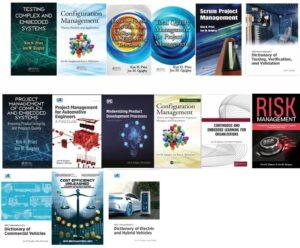

For more information, contact us:
The Value Transformation LLC store.
Follow us on social media at:
Amazon Author Central https://www.amazon.com/-/e/B002A56N5E
Follow us on LinkedIn: https://www.linkedin.com/in/jonmquigley/
https://www.linkedin.com/company/value-transformation-llc
Follow us on Google Scholar: https://scholar.google.com/citations?user=dAApL1kAAAAJ
