

Fac
 tory Acceptance Test (FAT) and Site Acceptance Testing (SAT) Overview
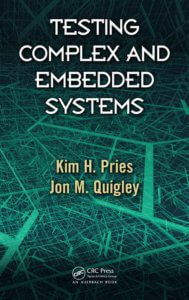
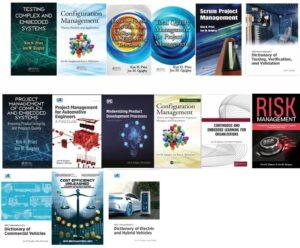
In product development, acceptance testing is a cornerstone of predictable, high-quality system deployment. As one of the authors of Configuration Management Theory and Practice, Testing of Complex and Embedded Systems, and multiple industry articles, I often emphasize that product and system verification must validate performance across both controlled and real-world conditions. The combined use of FAT and SAT is one of the clearest manifestations of this principle.
These two acceptance phases create a structured path from factory verification to operational validation, reducing project risk and ensuring that systems meet both design intent and customer needs.
I have had some recent consulting that is the origin of this post. Not that this is the situation at the consultation, but just made me think about this topic in wider context.
What Is Factory Acceptance Test (FAT)?
 A Factory Acceptance Test (FAT) is performed at the supplier’s facility before the equipment ships. Essentially, this informs the developing organization about the line’s potential to meet customer expectations and reduce delivery risk. The sooner we find what is not quite correct, the better off we are in making corrections or informed decisions. All my verification writing focuses on early defect discovery and test-to-requirements alignment. FAT aims to:
-
Verify the system meets documented specifications and standards.
-
Validate logic, performance, and safety functions in a controlled environment.
-
Catch low-cost, high-impact issues before installation, at the developing site, reducing costs.
-
Provide objective, documented evidence that requirements are satisfied.
The FAT environment is inherently stable—something I note is both an advantage (repeatability) and a limitation (lack of variation). It uses simulated stimuli and structured test data to evaluate system behavior against requirements.
What Is Site Acceptance Testing (SAT)?
 A Site Acceptance Test (SAT) occurs after installation at the customer’s facility and accounts for realities that cannot be fully reproduced in an off-site factory. My work frequently highlights that systems behave differently when subjected to actual environmental stimuli, tangible interfaces, and authentic operating conditions.
SAT ensures:
-
Complete system integration in its real environment
-
Functional performance under actual loads and stimuli
-
Compatibility with plant networking, power, and safety systems
-
Operator usability and process interaction
-
Verification of requirement conformance in the final configuration
SAT is where theory and specification meet reality—confirming that the product works where it matters most.
Why Both FAT and SAT Are Needed
I often explain that testing must validate not only what the system should do (specification intent) but also how it behaves in a range of real operating conditions. FAT and SAT together create a complementary testing architecture:
-
FAT identifies defects early, where they are cheapest to fix.
-
SAT validates performance in the real world, where variation, environment, and interfaces stress the system in different ways.
-
Combined, they ensure repeatability and reliability, a testing principle that assesses both requirement conformance and practical usability.
-
Regulatory compliance and industry standards often require both.
This dual structure fortifies risk control, schedule predictability, and customer confidence.
Supplier and Customer Collaboration in FAT and SAT Creation

We cannot over-stress the value of cross-functional and cross-organizational collaboration in requirements development, testing, and configuration management. Nowhere is this more visible than in FAT and SAT planning.
Both supplier and customer must collaborate early to define:
-
Test plans
-
Test stimuli and input data
-
Expected results
-
Acceptance criteria
-
FAT–SAT traceability
-
Configuration baselines
Why this collaboration is essential
-
Suppliers understand system design, internal constraints, and expected behaviors.
-
Customers understand actual operational conditions, environment, and failure consequences.
-
Together, they refine realistic, requirement-based test cases.
This is my position: testing must be rooted in shared understanding, not assumptions.
Need for Test Data, Testing Structure, and Matching Processes
F or FAT and SAT to be comparable and repeatable, they must be built from identical foundations—a concept I often connect to configuration management and requirement traceability.
To ensure repeatability between FAT and SAT:
-
Procedures must align (with similar sequences, logic, and intent).
-
Test data must match structurally, even if simulated in FAT and real in SAT.
-
Record configurations, including firmware, calibration, and software.
-
Acceptance limits and tolerances must be identical.
Why structured test data matters
I frequently note that structured and documented stimuli provide:
-
Traceability back to requirements
-
Repeatable verification across environments
-
Clear identification of deviations
-
Defense against disputes and ambiguity
Without defined, controlled test data, FAT and SAT become incomparable—defeating the purpose of acceptance testing.
Testing to Standards and Specifications
-
Regulatory compliance
-
Baseline performance criteria
-
Consistency across units and suppliers
-
A shared reference point between customer and supplier
I will underscore that standards provide structure, but they cannot fully replicate real usage.
Limits of Testing to Specifications
My work highlights several blind spots in specification-based testing:
-
Specifications cover nominal conditions but often miss real-world extremes.
-
Standards may not account for combined stresses (heat, vibration, contaminants).
-
Real environmental stimuli are complex to recreate under controlled conditions.
-
Misuse scenarios and operator variation may be excluded.
Thus, standards—while essential—do not eliminate the need for contextual testing like SAT.
 Variation and Limits of Acquiring Real Stimuli
My writing notes that variation is inevitable, and testing must acknowledge its impact on system behavior. Real-world operating conditions are introduced:
-
Temperature fluctuations
-
Vibration and shock
-
Voltage instability
-
Contaminants (moisture, dust, chemicals)
-
Operator variability
-
Mechanical wear
-
Load unpredictability
Practical limits to capturing real stimuli
-
Dangerous or extreme conditions cannot be safely replicated in FAT.
-
Long-duration stresses may exceed feasible test windows.
-
Some environmental variations defy precise reproduction.
-
Material and process variation make perfect repeatability impossible.
-
Real process inputs may be inconsistent from one test cycle to another.
This is why acceptance testing (FAT + SAT) must be designed with variation awareness—another recurring theme in my works.
Typical Failures When FAT and SAT Do Not Match
When test procedures, inputs, or criteria differ between FAT and SAT, predictable failures occur:
-
Integration issues undetected during FAT
-
Software/firmware version mismatches
-
Performance shortfalls under real loads
-
Environmental sensitivity not revealed in factory tests
-
Communication and interface errors
-
Safety system inconsistencies
-
Calibration drift or installation errors
-
Operator-induced variance
-
Disputes over pass/fail interpretation
These failures directly reflect the need for guidance on the dangers of unaligned, unstructured, or poorly baselined test processes.
Conclusion: Stronger Validation Through Dual Acceptance Testing
Referencing the principles emphasized—rigorous requirements, structured testing, understanding variation (stimulus and applications), and solid supplier-customer collaboration—FAT and SAT form a powerful validation chain. Together, they create a robust, repeatable, defensible approach to acceptance testing that ensures products perform reliably in the real world.

For more information, contact us:
The Value Transformation LLC store.
Follow us on social media at:
Amazon Author Central https://www.amazon.com/-/e/B002A56N5E
Follow us on LinkedIn: https://www.linkedin.com/in/jonmquigley/
https://www.linkedin.com/company/value-transformation-llc
Follow us on Google Scholar: https://scholar.google.com/citations?user=dAApL1kAAAAJ
