

Configuration & Data Management
Enterprise level Configuration and Data Management provides the backbone upon which Enterprise Management, Program and Project Management, IT Services, Software Management, Systems Engineering, Supply Chain Management and Contractual Requirements Management are built.

CDM Managment

Configuration and Data Management processes were first documented in the United States by the U. S. Department of Defense. Out of these requirements grew much of what is found in ISO and GEIA standards. While the currently defined requirements matured over the last 70 years their history pre-dates the Phoenicians and China’s first dynasty.
Change Management

The commercial world is governed by market change dynamics that greatly influence CM considerations, but also the viability and sustainability of products and the infrastructure required to market and support them. This is a much broader application than strictly government considerations for systems and goods often driven by logistical necessity or by a response to international considerations.
Configuration Audit

The validation of the product and the process helps ascertain the abilities of both the product and the manufacturing processes to meet the expectation or defined project and business goals. This phase includes trial production runs, run at rate runs, Measurement System Evaluation, Production Part Approval, and much more.
Configuration Identification

Configuration identification is the process for discovering and categorizing the attributes associated with the hardware or the software. These are recorded and will comprise the baseline of the product.
Configuration Verification

The first U.S. Verification Model (V-Model) appeared in a proposal from Hughes Aircraft in 1982 for the U.S. Federal Aviation Administration’s advanced automation system program. From the V-Model came our current conceptions of allocation, validation, and verification. Allocation assigns product requirements to systems and subsystems. Validation assures that the configuration was built to the engineering aka did we build it right. Verification assures all allocated requirements of a configuration have been met aka did we build the right thing.
Data Management

CM could not exist without its sub-element data management (DM). Although CM is most often associated with a product, DM is associated with every record in the company regardless of form or format. Data Management can be traced to the Samarian culture.
Planning and Management

Configuration planning is perhaps the most important aspect of a successful CM implementation. Not all configuration management activities are performed by an organization called Configuration and Data Management. To truly understand CM in the broader context, it must be viewed in relationship to the business as a whole, and at least a rudimentary grasp of the functional resources within an organization and their role as well as basic concepts regarding each roles primary function.
Status Accounting

Status and accounting is the activity involved in the collection, management, accounting for, and reporting on all of the information that is generated relative to a product regardless of source as well as data mining of that information
Configuration Management – a product management system that ultimately ensures product repeatability of performance, functional and physical attributes, by managing changes throughout the product development lifecycle.
Configuration Management discussion with Kim L. Robertson and Jon M. Quigley in Eindhoven Holland, during the guest lecture series and configuration management conference at Eindhoven University of Technology February 2019.
CM Theory Practice and Application
Configuration Management Tales part 1 , Joe Dager and Kim Robertson
Tales of configuration management part 1:
Configuration Management Tales part 2 , Joe Dager and Kim Robertson
Tales of configuration management part 2:
Evolution of the product through configuration management , Joe Dager and Jon M. Quigley
Discussion of the role configuration management plays in orchestrating the functional and feature growth of the product through the development process and throughout the product life-cycle:
PM Chat podcasts:
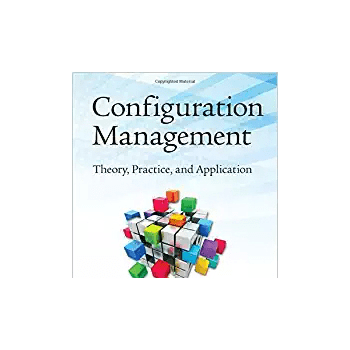
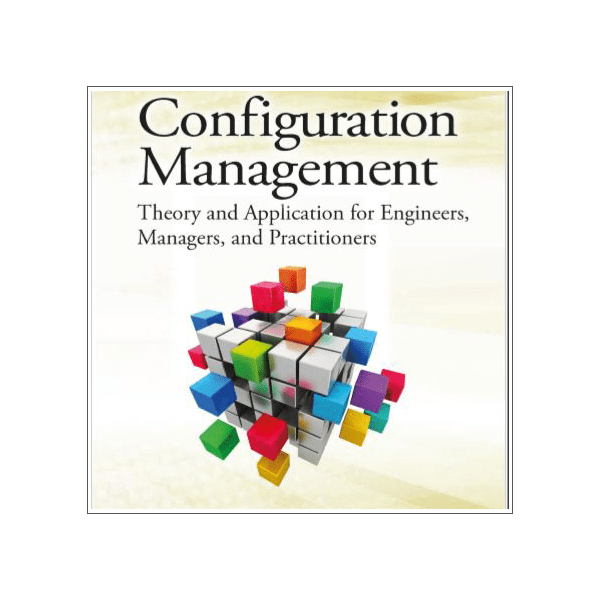
A podcast interview with Jon M. Quigley who along with Kim L. Robertson have written the book: Configuration Management Theory, Practice, and Application!
Jon M Quigley discusses requirements and configuration management required for incremental and iterative product development and it is incumbent upon the project manager to have a modicum of understanding about this product management area to ascertain the level of risks to the project based upon the level of capability of the organization.
Available Soon!
Software Process and Measurement Cast podcasts:
The Big Picture of Configuration Management, Tom Cagley and Kim L. Robertson
Configuration Management is a common thread that ties the various departments and organization together, facilitating coordination of effort and is fundamental to product and human growth.
Product Development and Configuration Management, Tom Cagley and
Jon M. Quigley
Configuration management, the management, and control of project deliverable, is one of the most critical practices anyone building a product, writing a piece of code or working on a project with more than one person involved must learn or face the consequences!
Spamcast 380 – Kim Robertson, The Big Picture of Configuration Management
https://spamcast.libsyn.com/category/Configuration+Management
SPaMCAST 346 – Configuration Management, An Interview With Jon M Quigley
https://open.spotify.com/episode/0yNV2BTLZh5KNkUxf1hzZF
SPaMCAST 575 – Messing Up Agile Hybrids, Deming and Book Club, Essays and Discussions
SPaMCAST 552 – Fit For Value, Saying No, Essays and Discussions
https://spamcast.libsyn.com/spamcast-552-fit-for-value-saying-no-essays-and-discussions
SPaMCAST 856 Playing Billiards On A Boat, Essays and Conversations with Jon M Quigley
Playing Billiards On A Boat, Essays and Conversations with Jon M Quigley, SPaMCAST 856

Control Plan Gaps: What Most Quality Professionals Overlook
Control Plan Gaps: What Most Quality Professionals Overlook Control Plans are among the foundational quality tools within Advanced Product Quality Planning (APQP) and are required by IATF 16949. They help…
PPAP Risk Management: Why Most PPAP Approvals Still Fail at Production Launch
PPAP Risk Management: Why Most PPAP Approvals Still Fail at Production Launch I recently reviewed a visual guide titled “How to Create PPAP – Complete Practical Master Guide.“ Like many…
Project Management Review: Strengths, Weaknesses, and Critical Execution Gaps
Project Management Review of the Deeply Practical Project Management Framework The “Deeply Practical Project Management” framework offers a strong foundation for structured project execution. William Stewart sent me some of…
Executive Decisions and Product Launch Failure: When Success Becomes a Blind Spot
Executive Decisions and Product Launch Failure Most executives do not wake up in the morning intending to launch a defective product. They are not trying to damage customer trust. They…
Product Development Writing: Why Engineers Must Think Beyond Engineering
Product Development Writing — Engineering Beyond Engineering I never intended to become a writer. I intended to become a product development professional. Like many engineers, I initially believed technical competence…
Inspection Fallout: Why More Inspectors Do Not Fix Broken Processes
The reflex response after a defect escape is often predictable: add more inspectors. More containment. More gate reviews. More signoffs. More checklists. The organization feels pressure to “do something,” and…
Relaxation in Moderation: The Discipline Behind Sustainable Success
Relaxation in Moderation and Sustainable Success Relaxation is important. Recovery matters. Rest is necessary. But “relaxation in moderation” is an idea that deserves more scrutiny than most people give it.…
Product Launch Delays: Configuration Management Matters
Product Launch Delays Continue to Impact Automotive and Technology Programs A recent Gartner study noted that nearly half of product launches experience delays of at least one month. That statistic…
How to Use AI in Business Processes for Faster Quoting, Smarter Design, and Improved Manufacturing Quality
How to Use AI in Business Processes for Faster Quoting, Smarter Design, and Improved Manufacturing Quality Artificial intelligence is no longer experimental—it is becoming essential for companies looking to improve…
Why Most Testing Strategies Fail: The Real Problem Isn’t Testing
Why Most Testing Strategies Fail: The Real Problem Isn’t Testing This post is borne out of a LinkedIn post. If you’re responsible for testing, here’s a simple question: 👉 Do…
CMMI Tracking
[sdm_download id=”15558″ fancy=”0″]
Contact Value Transformation about Configuration and Data Management
Error: Contact form not found.