

Prototype Parts vs Production Parts: Understanding Key Differences and the Path to Production
Introduction
The journey from an initial concept to a finished product involves several crucial stages, including prototyping and production. For both engineers and procurement teams, it’s vital to understand the differences between prototype parts, their uses, and the technical, regulatory, and supply chain hurdles involved in transitioning from prototypes to production vehicles. If you have been involved in product development for any time, you will already be familiar with the concepts discussed in this blog post. I am surprised that I have recently had conversations that hit a nerve, which compelled me to write this piece.
The problem for our procurement and manufacturing colleagues is that some rules will impact this transition from prototype to production parts.
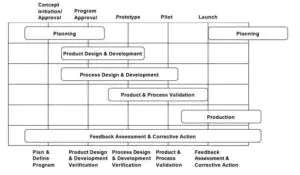
What Are Prototype Parts?
-
Prototype parts are early, working versions of a component used for design validation, fit and function checks, or functional testing.
-
Ideally, they enable rapid iteration, provide fast feedback, and facilitate early troubleshooting without the high cost or commitment associated with mass manufacturing.
-
Prototypes are typically created using flexible, quick-turn methods such as CNC machining, 3D printing, or urethane casting, and often employ substitute materials that approximate, but do not fully match, production-intent specifications.
- Prototype part development is often, or at least should be, used to develop the manufacturing line processes and key attributes. For example, the manufacturing team will learn about the Key Product Characteristics (KPC), which will enable them to infer the likely Key Process Characteristics (KPC).
What Are Production Parts?
-
Production parts are the final, approved designs manufactured in relatively large quantities for use in finished products, especially vehicles.
-
These parts are made with precise processes (like injection molding or die-casting), from final-grade materials, at high volumes. They are subject to strict quality assurance and quality control measures, as well as thorough documentation for traceability.
Technical Differences Between Prototype Parts and Production Parts
| Prototype Parts | Production Parts | |
|---|---|---|
| Purpose | Design validation, testing | End use in the final product |
| Materials | Substitute/approximate | Production-grade/approved |
| Processes | Quick-turn, flexible (CNC, 3D) | High-volume, specialized |
| Volume | Low (1-100s) | High (1000s to millions) |
| Fidelity/Testing | Limited, basic testing | Full regulatory and QA |
| Traceability | Minimal, basic | Serialized, fully documented |
| Cost per Part | High (low qty) | Low (economy of scale) |
-
Prototyping emphasizes speed and flexibility; production focuses on consistency, quality, and cost efficiency.
Why “Prototype Parts” Do Not Equal “Prototype”
It’s a common misconception to equate prototype parts with an actual prototype. A prototype is a complete sample or mockup of the product, using prototype parts, to test the general concept or subsystem fit and function. However, these parts:
-
May lack the full fidelity, materials, or precision of the final product.
-
Might not pass stringent tests for compliance, durability, or safety needed for real-world applications.
-
Serve a different role than the production-ready article: validation, not finished, approved design.
Procurement and Purchasing Challenges During Transition
The shift from prototypes to production-scale operations often exposes key supply chain and procurement challenges:
-
Supplier Capacity: Many suppliers excel at producing short-run, custom parts but struggle to scale to production quantities or meet tight deadlines.
-
Lead Times and Tooling: Production needs custom tooling, which is expensive and time-consuming to produce. Quick fixes for prototypes seldom scale directly.
-
Engineering Changes: Constant design tweaks in prototyping can disrupt production contracts or schedules.
-
Quality Assurance: Increased documentation, compliance checks, and serialization for production parts demand new supplier capabilities and rigorous oversight.
Why Prototype Parts Cannot Be Used in Production Vehicles (Per APQP/PPAP)
Advanced Product Quality Planning (APQP) and the Production Part Approval Process (PPAP) frameworks set stricter standards for parts used in production vehicles, particularly in the automotive industry:
-
APQP/PPAP requires that production parts be manufactured using fully validated processes and materials, with strict control plans, to ensure that parts meet customer and legal requirements with proven reliability and traceability.
-
Prototype parts are built outside approved conditions—often using different materials, simpler processes, and lacking the level of documentation and statistical quality control required for mass production.
-
Regulatory Requirement: Only components that have “passed” PPAP—demonstrating compliance with all design, performance, and process requirements—may be installed in vehicles for sale. Prototype parts cannot meet these PPAP/APQP demands and thus cannot be used in final, saleable products.

Procurement and Purchasing Challenges in Transitioning from Prototype to Production
Shifting from prototype development to full-scale production introduces a distinct set of procurement and purchasing challenges for organizations. This transition is crucial for ensuring that production parts meet industry and regulatory requirements while enabling cost-effective and reliable manufacturing.
-
Supplier Selection and Scalability: Vendors capable of producing small-batch, flexible prototype parts may lack the infrastructure or quality control necessary for mass production. Procurement teams must identify and qualify suppliers capable of consistently delivering high volumes with tight tolerances and robust traceability.
-
Lead Times and Tooling Investment: Prototype parts often leverage quick-turn, temporary processes and tooling. Production-scale manufacturing requires investment in dedicated tools, dies, and molds, which not only increases lead times but also demands significant up-front capital expenditure. Poor planning can result in costly delays or scheduling conflicts.
-
Process Documentation and Compliance: Production parts must adhere rigorously to standards such as Advanced Product Quality Planning (APQP) and the Production Part Approval Process (PPAP). This demands comprehensive documentation, first-article inspections, and quality audits—levels of oversight typically unnecessary during prototyping but crucial for regulatory approval and customer satisfaction.
-
Engineering Change Management: Frequent, sometimes last-minute design changes are common during the prototyping phase. Transitioning to production, however, requires locked-down designs, formal change control processes, and clear communication with suppliers. Failure to manage this can lead to parts obsolescence, increased scrap rates, and additional costs.
-
Pricing and Cost Control: Prototype components are often ordered in low volumes, resulting in higher per-unit costs. As volumes increase, procurement must negotiate prices that are sufficiently lower to meet target margins while maintaining quality standards. Misaligned expectations between engineering and purchasing on acceptable costs or minimum order quantities can create friction.
-
Quality Assurance and Traceability: Production procurement requires robust quality assurance systems, including serialized tracking, batch records, certifications, and supplier audits. Prototype suppliers may not offer this level of traceability, necessitating the development of new suppliers or upgrades to existing systems.
-
Logistics and Supply Chain: Scaling production introduces challenges in logistics, including warehousing, shipping schedules, and inventory management. Just-in-time delivery and supply chain disruptions must be proactively addressed to avoid production stoppages.
Overcoming these procurement and purchasing challenges during the transition from prototype to production is essential for minimizing risk, ensuring part quality, and meeting delivery commitments in regulated industries.
Mass Customized Products
Mass customized production parts—those made in flexible, digitally enabled manufacturing systems to precise customer or project requirements—offer a powerful bridge between the fast, iterative nature of prototyping and the robust reliability of traditional mass production. Unlike prototype parts, which are often crafted using non-final materials and processes with minimal traceability, or standard production parts, which emphasize consistency and scale, mass customization enables manufacturers to produce tailored components at volume while leveraging sophisticated digital manufacturing tools, modular designs, and agile supply chains. This approach can address several persistent challenges in the transition from prototype to production.
By utilizing technologies such as advanced CAD/CAM, 3D printing, and flexible robotic automation, mass-customized parts can be produced with nearly production-grade materials, tighter process controls, and enhanced documentation—even in low-to-mid volumes. This enables early validation under realistic conditions and facilitates smoother scaling, while also allowing for the rapid implementation of engineering changes and the prompt response to customer feedback, without the prohibitive tooling costs associated with traditional mass production. Modular product design—a hallmark of mass customization—enables late-stage differentiation, postponing specific configuration decisions until demand is apparent, which helps manage inventory more efficiently and reduces the risk of obsolescence.
It is essential to note that while mass customization narrows the gap between niche prototyping and scalable production, it introduces its challenges: increased complexity in supply chain coordination, higher per-unit costs compared to high-volume runs, stringent data management requirements, and the need for agile production planning. Yet, when strategically applied, mass customized production parts offer a flexible and efficient solution for manufacturers seeking to accelerate product launches, validate designs in real-world conditions, and adapt swiftly as products mature from prototypes to fully approved production components.
Conclusion
Understanding the differences between prototype parts is crucial for managing development risks, ensuring regulatory compliance, and maintaining quality when introducing a new product to market. Smoothly transitioning from prototype thinking to production reality demands technical rigor, robust supplier development, and strict work process discipline—especially when navigating APQP/PPAP guidelines in automotive, aerospace, and other regulated sectors.
Hey Product Development Engineers, please don’t stress out the Procurement Team with the idea of using prototype parts in production. The solution is not to use prototype parts in this manner, but to find a way to bridge the time gap between prototype and production. Realize that this will also present challenges; everything is a tradeoff. The supply chain will be exposed to various risks, and costs are likely to increase. Does the cost increase make sense? That is scenario dependent. What is the impact of the time gap from prototype to production? Whatever that is, prototype parts used on production vehicles are not a thing.

For more information, contact us:
The Value Transformation LLC store.
Follow us on social media at:
Amazon Author Central https://www.amazon.com/-/e/B002A56N5E
Follow us on LinkedIn: https://www.linkedin.com/in/jonmquigley/
https://www.linkedin.com/company/value-transformation-llc
Follow us on Google Scholar: https://scholar.google.com/citations?user=dAApL1kAAAAJ
