


New Part Number vs Revision Level in Product Management
One of the most debated topics in product management and configuration management is the decision between New Part Number and Revision Level.
When should a design change require a brand-new part number?
When is a revision level update sufficient?
The answer affects traceability, supply chain management, quality control, regulatory compliance, ERP systems, and long-term lifecycle management.
Understanding the distinction between Part Number and Revision strategies is essential for maintaining product integrity while avoiding unnecessary complexity.
This is not as simple as it seems, based on experience anyway. We have seen many failure modes in this regard, all with associated consequences.
Cost of Part Number
We worked at a place that resisted the urge to assign new part numbers for a product change. That can be a reasonable approach, given very specific circumstances, not a ubiquitous strategy. The cost of changing the part number was known, and it was to be avoided at all costs. Let’s imagine the cost was $3,000. How long do field failures have to go on before the costs are long past offset? It was deemed a better solution to alter the rev level of the assembly, for example, to Part Number 1234567 rev2. This might be a good approach, but if it is not possible to differentiate the rev level throughout the product pipeline from build to customer use, then perhaps this is not a good approach.
Understanding Part Numbers and Revision Levels
What Is a Part Number?
A part number uniquely identifies a product, component, or assembly. It represents a specific item with a defined:
-
Form
-
Fit
-
Function
-
Quality attributes
-
Compliance requirements
In configuration management, the part number is the baseline identity of the item in the product structure (BOM). Manufacturing and customer support benefit from differentiated part versions under this part number.
What Is a Revision Level?
A revision level indicates a change to an existing part number. Revisions track engineering changes without necessarily creating a new identity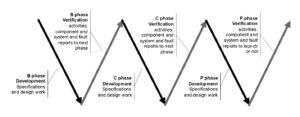 .
.
Revisions are typically used when:
-
Form, fit, and function remain unchanged
-
Improvements are minor
-
Documentation corrections occur
-
Process adjustments are made
The Part Number vs Revision decision hinges on impact.
Form, Fit, Function — and Quality Attributes
Most organizations rely on the classic rule:
If Form, Fit, or Function changes — create a new part number.
But modern product  management requires expanding this rule.
Beyond Form, Fit, Function
Consider:
-
Supplier changes or changes to the manufacturing line
-
Material substitutions
-
Manufacturing process changes
-
Tolerance adjustments
-
Regulatory reclassification
-
Software or firmware updates
-
Quality or reliability performance shifts
Even if form, fit, and function remain identical, a supplier capability change may:
-
Alter reliability
-
Change traceability requirements
-
Impact warranty risk
-
Affect regulatory compliance
In regulated industries (automotive, aerospace, medical devices), traceability alone can justify the issuance of a new part number.
Pros and Cons of Creating a New Part Number
Pros of a New Part Number
1. Clear Traceability
-
Distinct identity in ERP/MRP systems
-
 Clean separation of old vs new inventory
 -
Easier recall management
2. Strong Configuration Control
-
Prevents accidental mixing of incompatible versions
-
Simplifies compliance audits
3. Supply Chain Clarity
-
Clear supplier qualification boundaries
-
Better lifecycle tracking
4. Reduced Risk of Field Confusion
-
Technicians know exactly which part is installed
Cons of a New Part Number
1. Increased Complexity
-
More SKUs to manage
-
ERP system expansion
-
 Inventory fragmentation
2. Higher Administrative Overhead
-
New documentation
-
Updated drawings
-
Updated BOM structures
3. Cost Impact
-
Obsolete inventory risk
-
Procurement duplication
The Part Number vs Revision decision can significantly impact operational cost.
Pros and Cons of Using a Revision Level
Pros of Revision Level Updates
1. Maintains Product Contin uity
uity
-
Same part number in ERP
-
Simpler customer-facing communication
2. Lower Administrative Burden
-
No new SKU setup
-
Easier transition in the supply chain
3. Controlled Evolution
-
Tracks engineering change history clearly
Cons of Revision Level Updates
1. Risk of Mixed Inventory
-
Old and new revisions may coexist
-
Traceability challenges
2. Supplier Change Visibility Issues
-
Harder to distinguish performance differences
3. Audit Complexity
-
Regulators may require clearer separation
When improperly applied, revision updates weaken configuration control discipline.
Supplier Changes — New Part Number or Revision?
A common high-search question in product management is:
“If I change suppliers, do I need a new part number?”
The Answer: It Depends on Risk and Traceability
Create a new part number if:
-
Supplier capability differs significantly
-
Critical quality attributes change
-
Validation testing differs
-
Regulatory approval is supplier-specific
-
Failure modes differ
Use a revision level if:
-
Equivalent qualification data exists
-
Performance is statistically identical
-
Traceability is managed at lot level
Supplier changes are no longer just purchasing decisions — they are configuration management decisions.
Configuration Management Connection
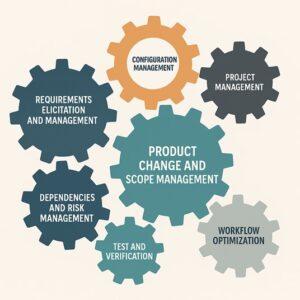
The Part Number vs Revision decision is fundamentally a configuration management issue.
Configuration management ensures:
-
Product baseline control
-
Change impact analysis
-
Version traceability
-
Lifecycle documentation
-
Controlled release processes
Without clear governance, companies suffer from:
-
Version confusion
-
Field failures
-
Audit findings
-
Warranty cost spikes
-
Inconsistent BOM structures
Strong configuration management defines:
-
Clear change thresholds
-
Cross-functional review boards
-
Formal change control procedures
Product management must align with configuration management to avoid uncontrolled variation.
Commonly Asked Questions (FAQs)
1. Does a drawing change require a new part number?
Not necessarily.
If the change does not affect form, fit, function, or critical quality attributes, a revision level is usually sufficient.
2. If tolerance changes, is that a new part number?
If tolerance affects performance, reliability, interchangeability, or compliance — yes.
If it improves manufacturability without affecting function, revision may be sufficient.
If there is a need to trace the different products in the field, for example, to replace failed parts.
3. Should cosmetic changes trigger a new part number?
Only if aesthetics are customer-specified requirements.
Otherwise, a revision level may suffice.
4. What about firmware updates?
If firmware fundamentally changes function — new part number.
If it fixes defects without altering intended function — revision.
Personally, I think these should warrant part-number changes in the automotive industry.
5. How does ERP impact the decision?
ERP systems handle part numbers more cleanly than revision history in many cases.
However, excessive new part numbers can clutter the system.
Your ERP capability should inform — not dictate — the decision.
6. How do regulated industries handle this?
Highly regulated industries often favor new part numbers for:
-
Safety-related changes
-
Supplier requalification
-
Process validation shifts
Traceability requirements frequently override simplicity.
Best Practice Decision Framework
When deciding Part Number vs Revision, ask:
-
Did form, fit, or function change?
-
Did critical quality attributes change?
-
Is regulatory approval impacted?
-
Is traceability at risk?
-
Could mixing versions create safety or warranty risk?
-
Does lifecycle stage matter (prototype vs production)?
If risk increases materially → New Part Number.
If risk remains controlled and traceable → Revision Level.
Final Thoughts on Part Number vs Revision
The Part Number vs Revision decision is not administrative — it is strategic.
Done correctly, it protects:
-
Product integrity
-
Customer trust
-
Regulatory compliance
-
Brand reputation
-
Lifecycle profitability
Done poorly, it creates confusion, rework, and hidden risk.
Product management and configuration management must work together to define clear thresholds, enforce disciplined change control, and maintain traceable product baselines.
In modern product development, managing Part Number vs Revision effectively is a core capability — not a clerical task.


For more information, contact us:
The Value Transformation LLC store.
Follow us on social media at:
Amazon Author Central https://www.amazon.com/-/e/B002A56N5E
Follow us on LinkedIn: https://www.linkedin.com/in/jonmquigley/
https://www.linkedin.com/company/value-transformation-llc
Follow us on Google Scholar: https://scholar.google.com/citations?user=dAApL1kAAAAJ
