Stop Copying Tools, Start Building a Mindset: Why Organizational Learning Culture is the Key to Success
The genesis of this post is from a LinkedIn post:
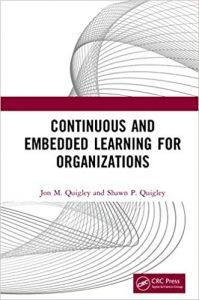
Common wisdom in manufacturing often holds that replicating the systems of successful giants, like Toyota, is the path to profitability. Yet, as the original post points out, many organizations meticulously follow the playbook—implementing 5S, 5-Why, and visual management—only to fail in the market. We have a colleague who used to say the bathroom tiles at Toyota were blue. Does that mean we need to make our bathroom tiles blue to succeed? We wrote a book with our brother, Shawn P. Quigley, on learning that covers this topic area.
The critical gap is failing to recognize that success isn’t about using the tools; it’s about adopting the underlying mindset of relentless problem-solving. To truly shift from blindly copying prescriptive steps to genuinely solving your organization’s unique, actual problems requires deep-seated changes in structure and, most importantly, fostering a robust organizational learning culture.
Here is what actually works when implementing an effective problem-solving mindset:
💡 Fostering the Organizational Learning Culture
The process of product development and improvement is fundamentally a learning process. To be productive and remain relevant, an organization’s talent must constantly seek to improve, understand, and adapt. We once helped build a verification and test department at a vehicle OEM. One of the first things I did was to purloin people (not my word, thank you, Steve B.) from other departments that exhibited the attributes needed for this new department. The next thing was to send the team for software testing certification training, even though at least 1/2 of the team were not software testers. I did not care if they achieved the testing certification, but this provided a common baseline – mental model (thank you, Peter Senge) from which we could build.
I would be persistent in bringing this mental model to the team every chance I get, but not in a way that is overbearing or stern. I would frequently ask the entire team what the next step was for a specific event, even when I already knew what it was and why. I wanted to hear the team member tell the rest of the team what the next step is, and if different from expected, we could all explore together to arrive at the appropriate answer.
Creating an effective environment requires encouraging learning and facilitating exploration, which in turn requires adopting a mindset of embracing controlled failure. The concept of “fail fast and fail often” enables teams to take calculated risks and respond constructively to setbacks, ensuring that when failure occurs, it is examined and shared so everyone can learn from it. We must provide space for team members to experiment, including not worrying about the outcome if the educated guess (risk) does not produce the desired result.
Management must play a crucial role in shaping this culture. The manager and the project manager (PM), for instance, must cultivate a work environment where seemingly “bad news,” such as unfavorable test results, is welcomed, as testing provides an objective critique of the product. These adverse results should be viewed as essential warning signals that require corrective actions to address the root cause, rather than being covered up.
🗣️ Communication and Transparency: Core to Organizational Learning Culture 
Effective adaptation cannot occur in an environment of fear or fragmented communication. For continuous improvement efforts to succeed, organizations must actively drive out fear.
If a team member fears speaking up or pointing out a problem, issues will be covered up rather than escalated for resolution. This internal friction, often categorized as office politics, can severely disrupt organizational harmony, leading to inadequate communication and difficulties in achieving successful product development.
Moreover, communication needs to be consistent and clear. Collaborative learning provides employees with a common lexicon, ensuring concepts are communicated clearly and consistently to prevent misunderstanding. This shared understanding ensures that all employees are working toward the same objectives.
🛠️ Mechanizing Knowledge for Sustainable Adaptation
 The greatest challenge after solving a problem is ensuring that the organization does not repeat the same failure—or, as metaphorically stated in the sources, “burning a hand on the same hot stove”. I have a serious problem – personally, with burning my hand on the same metaphorical stove, or being compelled to burn my hand on the stove due to decisions outside of my control.
Sustaining the problem-solving mindset requires that learning moves beyond the immediate team. This involves institutionalizing knowledge, essentially mechanizing it by creating a habit out of applying that learning, rather than merely documenting it passively.
- Continuous Review: Lessons-learned exercises should occur frequently—periodically throughout the project lifecycle—to foster constant feedback and self-calibration. Simple analytical tools like the 5-Why technique can be used to uncover issues, while affinity diagrams help categorize problem patterns.
- Capturing Tacit Knowledge: Knowledge management requires building a repository for both explicit (documented) and implicit (tacit or tribal) knowledge. Tacit knowledge consists of the undocumented ways things are actually done. This tribal knowledge must be formalized into explicit procedures so that it cannot be used as a source of power or political leverage, thereby inhibiting widespread sharing and improvement.
For an organization to thrive in a rapidly changing environment, inputs—such as technology, materials, and processes—cannot remain static. The true purpose of implementing improvement tools, whether 5-Why or comprehensive configuration management (CM), is to facilitate this continuous adaptation. Embedding the organizational learning culture makes this adaptation a natural, self-correcting process, moving the company beyond blindly following standards to achieving profitable and measurable results.

For more information, contact us:
The Value Transformation LLC store.
Follow us on social media at:
Amazon Author Central https://www.amazon.com/-/e/B002A56N5E
Follow us on LinkedIn: https://www.linkedin.com/in/jonmquigley/
https://www.linkedin.com/company/value-transformation-llc
Follow us on Google Scholar: https://scholar.google.com/citations?user=dAApL1kAAAAJ
