

Introduction: Feedback Loop Beginnings
The genesis of this article is a text from a longtime friend, Jason Newton, from my UNCC days. He is a musician, not a mimic like I consider myself, and an engineer of high caliber. He sent me a shirt with a saying, “I only give Negative Feedback,” along with an Op-Amp configured for a negative feedback loop. This post was additionally improved by my Best Buggy, I know they are of age where this name does not stick, but your kid is always your kid. They are also a talented engineer, we have written some IEEE articles together.
The shirt photo gave me a chuckle as there have been portions of my career where my input has been what executives have called negative or obstructionist (which I also believe those folks think is also negative feedback).
In engineering, the feedback loop is designed to protect us from catastrophic failure— it adjusts the system output, by sampling the output and using that to adjust the inputs, keeping the system operating safely. However, in most workplaces, it becomes less of a safety feature and more of a circus act.
Positive feedback loop? That’s how you get microphone screech, amplifier meltdowns, or, in the work world, three months spent working with a “preferred supplier” —self-aggrandizing. You’re not at the level to make strategic decisions.
Negative feedback loop? Supposed to be about stability. Instead, it means punishing the one person brave enough to say, “Hey, is anyone checking the brake pads before we add the rocket boosters?”
Neither of these is “best”; it is always circumstance and situation-dependent. There are times when we need positive feedback and times when we need negative feedback. Feelings about this clutter our ability to make informed and sound decisions. However, from experience, organizations hyperfocus on the positive as if that is the only option. This is especially true of the organization’s social aspects. I am not sure how this works in terms of supporting a measure of self-discipline, which to me, is part of most any endeavor.
I am reminded of a quote from Hamlet:
There is nothing either good or bad, but thinking makes it so
~Hamlet Act 2, Scene 2
Project Management: Scope Creep Parade
 Scope creep—endless bells and whistles, every idea “too good not to include.” Positive feedback loop rewards every extra feature, even if the project started out as a bread slicer and ends up as a lunar rover. Everyone applauds until the budget and timeline vaporize.
Scope size – in our misguided efforts to meet all of the customer’s unqualified expectations, we place the entire project at risk. From experience the effort to focus the scope can be ignored, not considering the longer term impact can mean (and often does) the customer will not get the smaller scope, or the larger scope within time and budget constraints.
Poor communication—managers skipping status meetings because “no news is good news.” Positive feedback loop for silence: nobody speaks up until it’s time for a postmortem and someone’s buying doughnuts as an apology. This one applies to product testing in spades! There are o defects reported in the system. Nobody follows that with have the parts been sent to testing? Is the reporting tool being used to report the defects?
Vague goals—launching with objectives like, “Let’s be innovative and agile!” Feedback loop rewards ambiguity, then blames the team for not reading minds.
Project acceptance – executives desired to turn a special customer order (low volume) from the vehicle manufacturer into a databook order, allowing all customers to order this system. Rather than accept the project without question, after all, it is already in production—albeit at low volume. I was asked for my input and asked questions regarding the present build, the example of which can be found immediately below. An executive approached me about my so-called obstructionist ways. I told them I brought rational questions to the discussion to help us understand how to proceed, and that seemed like negative feedback. However, a few questions (see examples below) were eventually answered, and the product did not move into the databook options.
- What is the total volume of the present customer orders produced?
- What percentage of build results in failures (quality) returns? How long?
- What is the nature of the failures? How much does this cost?
Product Development: Hype vs. Reality
 Design flaws—ideas based on PowerPoint fantasies, not actual prototypes. Positive feedback loop cranks up hype for features no user ever wanted.
Lack of validation—build it first, ask questions never. A feedback loop rewards cheerleaders, not skeptics, so the real test comes when customers demand refunds.
Customer misalignment—an executive from the marketing arm of a vehicle developer and manufacturing organization approached me about adding a subsystem to one of the vehicle brands. There were efforts underway to merge the architectures where possible, but the two vehicle brands were not the same. I told the marketing executive that it was not possible to add the telemetrics module to the existing architecture and expect the system to work. He did not like my explanation and set about adding the subsystem and selling the product. The large and influential customer received the product, and it did not work. Surprise, but not really. It took months to make right.
Manufacturing: FMEA or Feed Me Apocalypse
Equipment breakdowns—“Just run it till it dies; maintenance is for chumps.” Positive feedback loop prioritizes pushing the limits until a conveyor launches parts into the void. There is not need to have a list of equipment components and life expectancy.
Process variability—scrap rates rise, alarms ignored. Negative feedback loop buried under stacks of glowing KPI dashboards. Rather than understand the flow of the work, identifying restrictions and sources of that variation, we throw more material and talent (overtime hours) at the issue.
Material defects—noticeable cracks called “character.” Feedback loop amplifies “it’ll do!” until the recall letter arrives.
Human error—procedural drift enabled by “don’t slow production for quality.” Positive feedback loop for reckless speed, negative feedback for the slow and careful. KPIs for OPS are not aligned with minimizing risk, instead maximizing throughput while saying “slow is fast etc.”
- Derision of the process that may not even be followed
- No attempt to ensure the process as executed matches the process instructions- capturing improvements and reinforcing expectations of those working the line.
 Social Engineering: Feedback Loop of Doom
Organizations worship “innovation,” but the emotional feedback loop often rewards appearances rather than actual achievements. The loudest voice wins, whether the idea involves drones delivering pizza or a time machine built out of scrap bins.
Dissent? That belongs in the FMEA spreadsheet—filed under “ignored warnings” and “that one time Mike said don’t ship broken axles.”
Finale: How to Escape the Feedback Loop Circus
Healthy feedback loop means both enthusiasm and correction—like an engineer with a fire extinguisher, not just a match and a Red Bull. The difference between competent systems and flaming disaster? Listen to the awkward signals, the unpopular opinions, and the ghostly warnings scribbled on whiteboards by engineers long since driven mad by the status update ritual.
Feedback loop is not just an engineering principle—it’s the main act in every workplace failure mode circus. Use it wisely, or enjoy the ride!
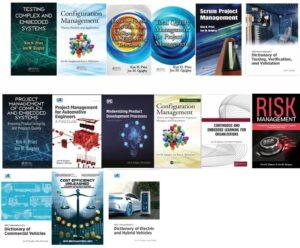

For more information, contact us:
The Value Transformation LLC store.
Follow us on social media at:
Amazon Author Central https://www.amazon.com/-/e/B002A56N5E
Follow us on LinkedIn: https://www.linkedin.com/in/jonmquigley/
https://www.linkedin.com/company/value-transformation-llc
Follow us on Google Scholar: https://scholar.google.com/citations?user=dAApL1kAAAAJ
