
Root Cause Thinking and Risk-Based Quality Management
December 28, 2025
5 P's of Risk Management, continuous improvement, Decision-Making Under Uncertainty, Jon M. Quigley, operational excellence, Quality Management, Risk-Based Management, Root Cause Thinking, Systems Thinking, Value Transformation LLC
Agile and Lean, APQP, Business, Communications, Configuration Management, Cost Improvement, Cost Management, Human Resources, Leadership, Learning Organization, Management, Manufacturing, Organization Development, Process Improvement, Product Development, Quality, Root Cause Analysis, Uncategorized
Problems Are Symptoms of Unmanaged Risk
by Jon M Quigley
 This post is in response to an article on LinkedIn from Habib ur Rehman on blaming operator mistake as the root cause, and operator training as corrective action. This article is very timely, as I have been involved in consulting work where this situation was evident.
Many organizations treat problems as isolated events rather than as indicators of deeper uncertainty within their systems. From experience, quality failures are rarely the result of a single mistake—they are the predictable outcome of unexamined assumptions, unmanaged risk, and weak system design. Repeatedly seeing a recurring failure we attribute to the operator indicates a process issue that needs to be addressed. This is where Root Cause Thinking becomes essential. When it becomes clear that training is insufficient to deliver a repeatable outcome, it is time to consider Poke-Yoke or create gauges or tools to ensure repeatability. Do we inspect process equipment setup and product produced from a process station?
Rather than reacting to defects or incidents, Root Cause Thinking encourages organizations to examine why the system led to the outcome. This approach aligns directly with risk-based quality management and long-term operational excellence.
Root Cause Thinking as a Risk Management Discipline
Root cause analysis is not merely a quality tool—it is a risk identification activity. Problems emerge when uncertainty interacts with people, processes, and decisions. We can use tools such as A3 or 8Ds to identify the root cause. However, no amount of tools or techniques will help if there is little, inconsistent, or no management backing the priority. This also holds true in practice: when we see root cause analysis and improvement efforts fall by the wayside due to other priorities. We are big fans of Total Quality Management techniques because they are relatively straightforward; one need not be an industrial engineer to use them. Check this article from Steven G. Lauck.
Root Cause Thinking reframes failures as:
-
Evidence of risk exposure
-
Signals of system fragility
-
Feedback on decision-making effectiveness
- Lack of engagement from the management/executive class, for example a single-page report periodically on the status is not necessarily the solution.
When organizations focus solely on correcting the immediate issue, they ignore the risk pathways that created the problem in the first place. They do not address the immediate symptom, thereby ensuring the issue becomes recurring.
 Why Blame Fails and Systems Matter
Blame Masks Risk
A recurring theme in my work is that blame obscures learning. Even when we do not take this defect out on the line personnel, saying it is only a training issue, we do our company a disservice. When an organization attributes failure to individuals, it avoids confronting:
-
Poorly defined processes (techniques and tools)
-
Inadequate controls (not part of a control plan)
-
Misaligned incentives
-
Ambiguous decision authority
Root Cause Thinking shifts attention from “who failed” to “what conditions made failure likely.”
Systems Create Outcomes
Outcomes—good or bad—are produced by systems. If a system consistently produces defects, delays, or safety events, it is functioning exactly as designed.
Root Cause Thinking requires leaders to examine system structure rather than isolated behavior. The system includes all technical and interpersonal elements. This includes tacit and explicit knowledge, and actions taken to manifest continuous improvement.
Connecting Root Cause Thinking to Operational Excellence
Operational excellence is not achieved through efficiency alone. According to Quigley’s risk-focused perspective, excellence is achieved when organizations reduce uncertainty in decision-making and execution.
Root Cause Thinking supports operational excellence by:
-
Identifying systemic weaknesses before failure recurs
-
Improving predictability and reliability
-
Enabling better-informed decisions
-
Aligning corrective actions with risk reduction
This makes root cause analysis a strategic capability, not a compliance exercise.
Root Cause Thinking and the 5 Ps of Risk

5P’s of Risk Management
Jon M. Quigley’s 5 Ps of Risk Management ™—People, Principles, Process, Practices, and Perceptions—provides a powerful lens for root-cause analysis.
People
Are roles, competencies, and authority clearly defined? Do we have the appropriate talent stack? Does our organization’s culture support continuous improvement efforts? Do we allocate time for this effort? Is it a priority? Do we have a psychologically safe organization? Do we have a diversity of perspectives on our team?
Principles
Do consistent values and risk tolerance guide decisions? Do we have a clear enough definition of the objectives, including the boundaries and specific capabilities needed? What production limitations can we live with, and what must be solved?
Process
Is the process designed to prevent known failure modes? Do we have a PFMEA (Process Failure Mode and Effects Analysis), and is it connected to the Control Plan? Do we have processes in place to continuous improvement of the manufacturing line?
Practices
Are procedures actually followed—or merely documented? Are we disciplined in the approach? Do we appropriately measure the appropriate things? Do we encourage shortcuts during times of duress, for example, to meet delivery dates, or do we disregard our processes?
 Perceptions
How do we handle evoking cognitive biases? How do we learn? What heuristics guide our decision-making?
Using Root Cause Thinking through the 5 Ps reveals not just what failed—but why the organization believed the risk was acceptable.
Building a Sustainable Root Cause Thinking Culture
To embed Root Cause Thinking into the organization:
Treat RCA as Learning, Not Policing
Root cause analysis should expand organizational knowledge, not assign fault.
Integrate RCA with Risk Reviews
Root causes should feed directly into risk registers, decision frameworks, and governance processes.
Focus on Preventing Recurrence
If the same issue reappears, the root cause was never addressed—only the symptom.
Root Cause Thinking Enables Better Decisions
From my perspective, Root Cause Thinking is fundamentally about decision quality under uncertainty and a measure of discipline. Organizations that embrace it move beyond reactive fixes (placing the root cause on the line worker) and begin designing systems that are resilient, transparent, and aligned with their risk appetite.
When root cause analysis is treated as a strategic risk management practice, quality improves—not by accident, but by design.
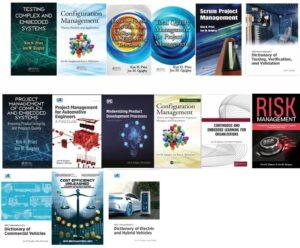

For more information, contact us:
The Value Transformation LLC store.
Follow us on social media at:
Amazon Author Central https://www.amazon.com/-/e/B002A56N5E
Follow us on LinkedIn: https://www.linkedin.com/in/jonmquigley/
https://www.linkedin.com/company/value-transformation-llc
Follow us on Google Scholar: https://scholar.google.com/citations?user=dAApL1kAAAAJ
