


 Mitigating Risk No. 1: Deliver the Expected Outcome
Even a well-planned project can miss its goal. This can waste time and money, damage trust, harm the team’s image, and cost us opportunities. Teams can lower this risk through clear plans, open communication, and regular checks.
If we discuss risk, we should bring in a few concepts – or key words.
- Reality — Ontological
- Do we understand the system we’re actually dealing with?
- Knowledge — Epistemological
- What do we know about it, what are we assuming, and what evidence supports those beliefs?
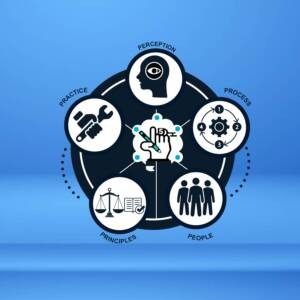 Value — Axiological
- What outcomes matter, and what tradeoffs are we willing to make?
- Method — Methodological
- Are we using appropriate methods to reduce uncertainty?
- Reasoning — Logical
- Do the conclusions follow from the evidence?
- Language — Semantic/Hermeneutic
- Do stakeholders understand requirements and evidence the same way?
- Experience — Phenomenological
- Does real-world behavior correspond to our technical description of success?
- Execution — Praxeological
- Does what actually happens in development, manufacturing, testing, and use match what we think happens?
Understanding the Risk
A project may fail because its goals are unclear, the plan is weak, key people are not involved, or resources are limited. These issues can create a gap between the goal and the final result. If the team sees that gap early, it can adjust the plan.
|
Risk perspective |
Risk-management question |
What it exposes |
Example in product development |
|
Ontological risk |
What actually exists? |
Risk from misunderstanding the real system, environment, interfaces, dependencies, or conditions |
An ECU is treated as an independent component when its behavior actually depends on network traffic, other ECUs, sensors, power states, and software versions. |
|
Epistemological risk |
What do we actually know, and how do we know it? |
Risk from assumptions, incomplete evidence, weak data, outdated knowledge, or unjustified confidence |
A simulation predicts adequate thermal performance, but the model has not been correlated with physical testing. |
|
Axiological risk |
What do we value or prioritize? |
Risk created by competing objectives or incorrect priorities |
Schedule pressure causes a team to accept reliability risk to meet a launch date without explicitly recognizing the tradeoff. |
|
Methodological risk |
How are we finding out? |
Risk that the methods used to develop, analyze, verify, or make decisions are inadequate |
Testing verifies nominal operation but does not examine boundary conditions, interactions, degraded modes, or environmental extremes. |
|
Logical risk |
Does our conclusion actually follow from the evidence? |
Faulty reasoning, correlation/causation errors, confirmation bias, or unsupported conclusions |
“The prototype passed 500 hours, therefore the production design will meet its 10-year reliability requirement.” |
|
Semantic risk |
Do we mean the same thing? |
Ambiguous terminology, requirements, specifications, interfaces, and acceptance criteria |
The OEM says a feature must be “available” while the supplier interprets that as powered rather than operational and responsive. |
|
Phenomenological risk |
What are people actually experiencing? |
Difference between specified/measured performance and real-world experience |
A vehicle feature technically meets its response-time requirement but drivers perceive it as sluggish or unpredictable. |
|
Hermeneutic risk |
Are we interpreting the information correctly? |
Different interpretations of requirements, standards, test results, customer statements, or regulations |
OEM and supplier interpret the same cybersecurity requirement differently. |
|
Praxeological risk |
What happens when people actually do the work? |
Gap between documented process and actual execution |
The Control Plan requires an inspection, but production realities make operators routinely bypass or abbreviate it. |
Understanding the Risk
 A project may fail because its goals are unclear, the plan is weak, key people are not involved, or resources are limited. These issues can create a gap between the goal and the final result. If the team sees that gap early, it can adjust the plan.
Steps to Reduce This Risk
1. Set Clear Project Goals
Agree on goals that are clear and easy to measure. Use the SMART method: Specific, Measurable, Achievable, Relevant, and Time-bound. This helps everyone know what success looks like.
Example: Instead of saying, “Finish Phase One by December 6,” say, “Complete all Phase One tasks, check that they meet the agreed standards, and prepare the site for a senior management tour by December 6.”
2. Build a Clear Project Plan
A good plan gives the team a shared path. It should explain the work, schedule, roles, and resources needed to reach the goal. Include the attributes of what good for the work product delivery looks like. Metrics.
Include these key items:
- Tasks: Use a Work Breakdown Structure (WBS) to split the work into smaller parts. This is where you describe what good work product looks like, using the work breakdown structure dictionary.
- Schedule: List deadlines and show which tasks depend on others.
- Roles and resources: Name who will do the work and list the money, people, and tools needed for each phase.
3. Involve Stakeholders Early and Often
People are more likely to support a project when they have a voice in it. Identify those most affected by the work and involve them early. Ask about their needs and what success looks like for them. For example, whether it is a new building or new equipment installed, I believe in including the maintenance team from the start. They are always given drawings to review.
Hold an early one-on-one talk or group meeting. Use it to confirm goals, gather input, and understand each stakeholder’s expectations. Do not stop after one meeting. Stay in touch to keep everyone aligned and prevent surprises.
Some project managers hold regular meetings. Others use less formal talks. After each talk, document the key points and decisions.
Work With Subject Matter Experts
Find subject matter experts (SMEs) in your company, the client’s company, or a professional group such as the Institute of Electrical and Electronics Engineers (IEEE). 
To get clear and useful answers from an SME:
- Explain the issue in enough detail, but do not share facts protected by a nondisclosure agreement (NDA).
- Prepare clear, specific questions.
- Make sure you understand the answer.
- Write down the advice and any next steps.
4. Assess Project Risks
Find risks early so the team can act before they cause problems. For each risk, ask two questions: How likely is it to happen? How much harm could it cause?
Create a useful Risk Plan and Risk Register:
- Assign one person to manage each risk.
- List clear steps to lower the risk.
- Make a backup plan for risks that could cause major harm.
Review risks often:
Risk review is not a one-time task. Add it to regular team meetings. Risk owners can share changes, update plans, and report new concerns.
 5. Track Progress and Results
Use Key Performance Indicators (KPIs) to compare progress with project goals. Regular reviews help the team spot delays, quality problems, or new needs while there is still time to act.
Useful steps include:
- Use project software to view current progress.
- Hold short status meetings to review progress, decisions, and roadblocks.
- Change the plan when the project starts to move off track.
6. Focus on Quality
Set quality standards at the start and link them to the project goal. Review and test the work during the project. Early checks make problems easier and less costly to fix.
Quality checks may include:
- Peer reviews and planned tests.
- Stakeholder feedback at key points.
- Clear rules for accepting major work products.
Conclusion
A good plan alone cannot ensure success. A project also needs clear goals, active stakeholder support, regular risk reviews, steady progress checks, and a focus on quality. These habits help teams use resources well and deliver results that matter.
Ask yourself one question: Which step would help your project most right now? Start there. This can turn risk management into a useful tool for better results.

For more information, contact us:
The Value Transformation LLC store.
Follow us on social media at:
Amazon Author Central https://www.amazon.com/-/e/B002A56N5E
LinkedIn: https://www.linkedin.com/in/jonmquigley/
https://www.linkedin.com/company/value-transformation-llc
Follow us on Google Scholar: https://scholar.google.com/citations?user=dAApL1kAAAAJ
