


The problem is that inspection fallout rarely solves the actual problem.
In many organizations, inspection becomes a surrogate for process capability. Instead of improving the product development system, manufacturing process, requirements clarity, configuration management discipline, or verification strategy, companies simply increase human observation. That approach may temporarily reduce outgoing defects, but it often increases cost, delays throughput, creates bottlenecks, and introduces new opportunities for human error.
Inspection Fallout and the Illusion of Control
Inspection fallout creates the appearance of improved quality without necessarily improving the system itself.
A mature organization asks:
- Why did the defect occur?
- Why did the process allow it?
- Why was the escape not detectable earlier?
- What variation sources existed?
- Was the requirement ambiguous?
- Was the configuration wrong?
- Was the test coverage incomplete?
- Did manufacturing readiness actually exist?
Too often, organizations skip directly to adding inspectors to avoid difficult conversations about process discipline, leadership decisions, technical debt, supplier capability, unrealistic schedules, or inadequate verification planning.
This is where inspection fallout becomes dangerous. The organization begins confusing detection with prevention.
Quality Cannot Be Inspected Into a Product
 This principle has existed for decades, yet many organizations continue to operate as though a few inspectors can compensate for weak engineering or unstable processes. I remember my first engineering job, the company had a sign on the wall, ” You don’t get what you expect, you get what you inspect.”
Inspection has value. Verification has value. Audits have value. But they must operate within a capable system. Physical inspections by people have limits bound by the ever-decreasing attention span of most humans. Thank you, smartphones. There are solutions for this, though. I worked at a company that manufactured ordinary products but did so with extraordinary processes, including cameras that continuously inspected parts off the manufacturing line at a very high rate of throughput.
In automotive, heavy vehicle, aerospace, and industrial manufacturing environments, we personally consider design reviews a valuable inspection methodology- provided our team takes it seriously and aggressively. In fact, on the day when I would be routinely connected to facilitating the design review, I wanted to see a markup of the artifact as the cost of entry. If this was not demonstrable, then no need for you to be in this review, and we will chat later to find out why this happened.
I have repeatedly seen organizations rely on inspection layers instead of addressing:
- Poor requirements decomposition
- Weak interface management
- Inadequate DFMEA (linked to exploratory and DVT) and PFMEA (linked to exploratory and PVT)
- Weak control plans
- Configuration management failures
- Branching and merging conflicts in software and calibration management
- Supplier variation
- Inadequate manufacturing process controls
- Unrealistic launch timing
- Poor communication between engineering and manufacturing
The result is predictable: inspection fallout expands while organizational learning shrinks.
Inspection Fallout Often Hides Configuration Problems
 One of the least discussed contributors to recurring defect escapes is poor configuration management. This seems trivial until it is not. I have seen a project go months beyond the schedule and millions of dollars due to rework of many types.
A product may technically pass inspection while still being the wrong version, calibration, firmware, drawing revision, or manufacturing parameter set. Organizations frequently underestimate the number of quality escapes that originate from uncontrolled or poorly governed changes.
This is especially true in modern software-defined and electronically complex products, or embedded systems development and maintenance.
Adding inspectors after a defect escape does not solve:
- uncontrolled revisions,
- undocumented changes,
- incorrect software baselines,
- improper branching and merging,
- or disconnected product structures.
Inspection fallout grows because the system architecture governing change is weak.
Defect Escapes Are Usually System Signals
A defect escape should spark curiosity, not panic.
The response should include:
- Root cause analysis
- Process capability review
- Variation analysis
- Requirements traceability review
- Verification coverage assessment
- Manufacturing readiness evaluation
- Configuration management audit
- Risk reassessment through DFMEA and PFMEA
Instead, organizations often default to inspection fallout because it feels measurable. Leadership can point to increased headcount and claim action was taken.
Unfortunately, this can create hidden costs:
- slower throughput,
- increased labor expense,
- delayed launches,
- morale degradation,
- inspection fatigue,
- and normalization of weak process discipline.
Mature Organizations Reduce Dependence on Inspection
The highest-performing organizations do not eliminate inspection entirely. They reduce dependency on it by improving process capability upstream.
That includes:
- robust requirements management,
- better systems engineering,
- integrated DFMEA/PFMEA activities,
- effective control plans,
- design verification aligned to real-world stimuli,
- statistical process control,
- disciplined configuration management,
- and continuous organizational learning.
Inspection fallout decreases when the system itself improves.
That is the distinction many organizations miss.
Inspection is not a substitute for engineering rigor.
The Real Goal Is Process Capability
The goal is not to create an army of inspectors.
The goal is to create products and processes that consistently achieve intended outcomes with minimal variation and predictable performance.
That requires leadership willing to confront uncomfortable truths:
- schedules may be unrealistic (probably are actually)
- requirements may be incomplete (often)
- interfaces may be poorly defined,
- suppliers may not be ready,
- software integration may be immature,
- or manufacturing processes may not be stable.
Inspection fallout becomes organizational camouflage when those issues remain unresolved.
The most effective organizations understand that sustainable quality emerges from disciplined systems, not endless containment activity.
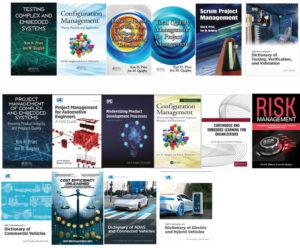

For more information, contact us:
The Value Transformation LLC store.
Follow us on social media at:
Amazon Author Central https://www.amazon.com/-/e/B002A56N5E
Follow us on LinkedIn: https://www.linkedin.com/in/jonmquigley/
https://www.linkedin.com/company/value-transformation-llc
Follow us on Google Scholar: https://scholar.google.com/citations?user=dAApL1kAAAAJ
