


Control Plan Gaps: What Most Quality Professionals Overlook
Control Plans are among the foundational quality tools within Advanced Product Quality Planning (APQP) and are required by IATF 16949. They help organizations define process controls, monitor product characteristics, and establish reaction plans when performance deviates from expectations. This blog post is prompted by a LinkedIn post on Control Plans by Dinesh Kumar.
Recently, I reviewed a visual overview of Control Plans that effectively introduced the concept and highlighted key elements, including Prototype Control Plans, Pre-Launch Control Plans, Production Control Plans, control methods, and reaction plans. While the infographic serves as a useful learning tool, it leaves out several important aspects necessary for successful implementation in a modern manufacturing environment.
Understanding these Control Plan Gaps is critical for organizations seeking operational excellence, regulatory compliance, and customer satisfaction.
What Is a Control Plan?
A Control Plan is a documented description of the systems and processes used to control product and process characteristics. It identifies:
- Process steps
- Product and process characteristics
- Control methods
- Measurement techniques
- Inspection frequencies
- Responsible personnel
- Reaction plans
The primary objective is to ensure consistent product quality while reducing variation and preventing defects.
Why Identifying Control Plan Gaps Matters
Many organizations treat the Control Plan as a static document or inspection checklist. In reality, it should function as a dynamic process management tool that translates risk into actionable controls.
Failing to address Control Plan Gaps can lead to:
- Increased process variation
- Higher defect rates
- Customer complaints
- Audit findings
- Production disruptions
- Increased cost of poor quality
Critical Control Plan Gaps Often Missed
Missing Connection to PFMEA and Process Flow Diagrams
A Control Plan should not be developed independently. Instead, it should directly reflect:
- Process steps identified in the Process Flow Diagram
- Risks identified in the PFMEA
- Actions designed to reduce occurrence, detection, or severity ratings
Without this linkage, risk mitigation efforts may be incomplete. The control plan grows as the manufacturing line grows and matures. Ideally, it is connected to PFMEA, engineering testing (e.g., design of experiments and other manufacturing line learning experiments), and Process Validation Testing and engineering.
Lack of Special Characteristics Identification
Many Control Plans fail to clearly identify:
- Critical Characteristics
- Significant Characteristics
- Safety Characteristics
- Regulatory Requirements
- Customer-Specific Requirements
These characteristics often require enhanced monitoring and more robust control methods.
Inadequate Measurement System Analysis (MSA)
A process cannot be controlled if measurements are unreliable.
Control Plans should reference:
- Gauge Repeatability and Reproducibility (GR&R)
- Attribute Agreement Analysis
- Calibration requirements
- Measurement system capability
Without MSA integration, organizations risk making decisions based on inaccurate data.
 Limited Use of Statistical Process Control (SPC)
Effective Control Plans should identify when SPC is required and specify:
- Control chart types
- Sampling plans
- Process capability requirements
- Escalation criteria
SPC provides early detection of variation before defects occur.
Insufficient Error-Proofing Methods
Many organizations rely heavily on inspection instead of prevention.
Strong Control Plans incorporate:
- Poka-Yoke devices
- Automated verification systems
- Mistake-proofing techniques
- Process interlocks
Prevention controls are generally more effective than detection controls.
Weak Change Management Processes
Control Plans should evolve as processes change.
Updates should occur when:
- Product designs change
- Process parameters change
- Suppliers change
- Customer requirements change
- New risks are identified
Failure to maintain current documentation creates significant quality risks.
Incomplete Reaction Plans
Reaction plans should go beyond simply stopping production.
Effective reaction plans include:
- Containment activities
- Root cause analysis
- Corrective actions
- Verification of effectiveness
- Customer notification requirements
The goal is not merely to react but to prevent recurrence.
The Role of Control Plans in PPAP and IATF 16949
Control Plans are a critical component of the Production Part Approval Process (PPAP) package.
They demonstrate:
- Process readiness
- Risk mitigation strategies
- Compliance with customer requirements
- Production consistency
IATF 16949 further emphasizes the need for Control Plans to be maintained, reviewed, and continuously improved throughout the product lifecycle.
Moving Beyond Compliance
Organizations often create Control Plans to satisfy customer or audit requirements. However, the greatest value comes when Control Plans become active tools for process management.
A mature Control Plan should:
- Drive risk-based thinking
- Support continuous improvement
- Reduce variation
- Improve product quality
- Enhance customer satisfaction
When properly implemented, Control Plans become a practical extension of operational excellence initiatives rather than merely another quality document.
Final Thoughts
The infographic provides an excellent introduction to Control Plans and their role in process control. However, understanding and addressing Control Plan Gaps is essential for organizations pursuing world-class quality performance.
The most effective Control Plans are not standalone documents. They are integrated with PFMEA, Process Flow Diagrams, MSA, SPC, PPAP, and continuous improvement activities. When these elements work together, organizations can better manage risk, prevent defects, and consistently meet customer expectations.
Quality professionals should regularly review their Control Plans to ensure they remain relevant, effective, and aligned with evolving process risks.
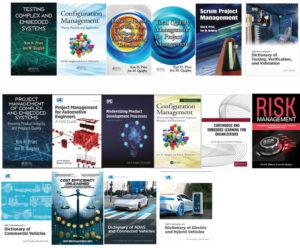

For more information, contact us:
The Value Transformation LLC store.
Follow us on social media at:
Amazon Author Central https://www.amazon.com/-/e/B002A56N5E
Follow us on LinkedIn: https://www.linkedin.com/in/jonmquigley/
https://www.linkedin.com/company/value-transformation-llc
Follow us on Google Scholar: https://scholar.google.com/citations?user=dAApL1kAAAAJ
