

Requirements Management
The requirements are the reason for the project and development work. Requirements set the expectation for the final product. Either these are achieved or there are reasons communicated to the stakeholder to alter or eliminate specific subset of the requirements. Requirements management requires an understanding of the connection between the requirements, the project objective, and ultimately the work of the project. Requirements management includes commitment to meeting the requirements, the bi-directional traceability of the requirements from customer input to instantiation of the product as well as addressing requirements changes systematically.
Commit to Requirements

To reach the objective the organization must stand behind the requirements. If the organization is not able to commit to meeting the requirements there is no sense in undertaking the project. To be able to commit to the requirements means understanding the requirements without understanding the commitment is hollow.
Evoke Requirements

There are a number of approaches available to evoke and documenting the requirements. To be able to gather the requirements necessitates knowing who will provide this information. Requirements are written in a very specific way to reduce the possibility of multiple interpretations. There will be metrics by which the requirements will be compared to determine if these are written meeting the objective and where the interpretation is singular.
Work Performed and Requirements Discrepancies
The requirements are documented and the team moves to incarnate the specifics that will constitute the product or system over time. A comparison of the work being performed and the work products are conducted periodically to uncover any deviation from the objective. Once uncovered the project and product development work will be altered to ensure that the work being performed is to deliver the expectations defined in the requirements.
Manage Requirements
Managing the requirements is where inconsistency in the requirements from the project objectives as well as maintaining the interconnectivity and dependencies between requirements are maintained. Any inconsistency in the requirements will require corrective actions. As the projects progresses, changes will likely happen, managing the changes and adaptation to the requirements will also be part of managing requirements.
Requirements Traceability
At any time in the product development lifecycle there is a traceable connection between the requirements and the project objectives and plans. This makes identification of the contents of the product at any given point; that is a connection between an instantiation of the product and the requirements through to the project objectives. This connection ensures the requirements; product development and project effort are aligned to produce the desired project results.
Requirements management – consists of the approaches we use to evoke, prioritize and document the expectations of the product. This includes the quality attributes of the articulation of those requirements along with managing the changes and traceability of the requirements to the customer’s needs or demands.
- Smart File Requirements Management Standards
- PD&D Understanding Real Demands On the Product part 1
- PD&D Understanding Real Demands On the Product part 2
- Embedded – Using requirements planning to collect analyze and meet product goals
- Bar code test: STANDARDS: ARE THEY IMPORTANT AND WHY?
- All Dev Teams Write Documentation. But Do Users Read It?
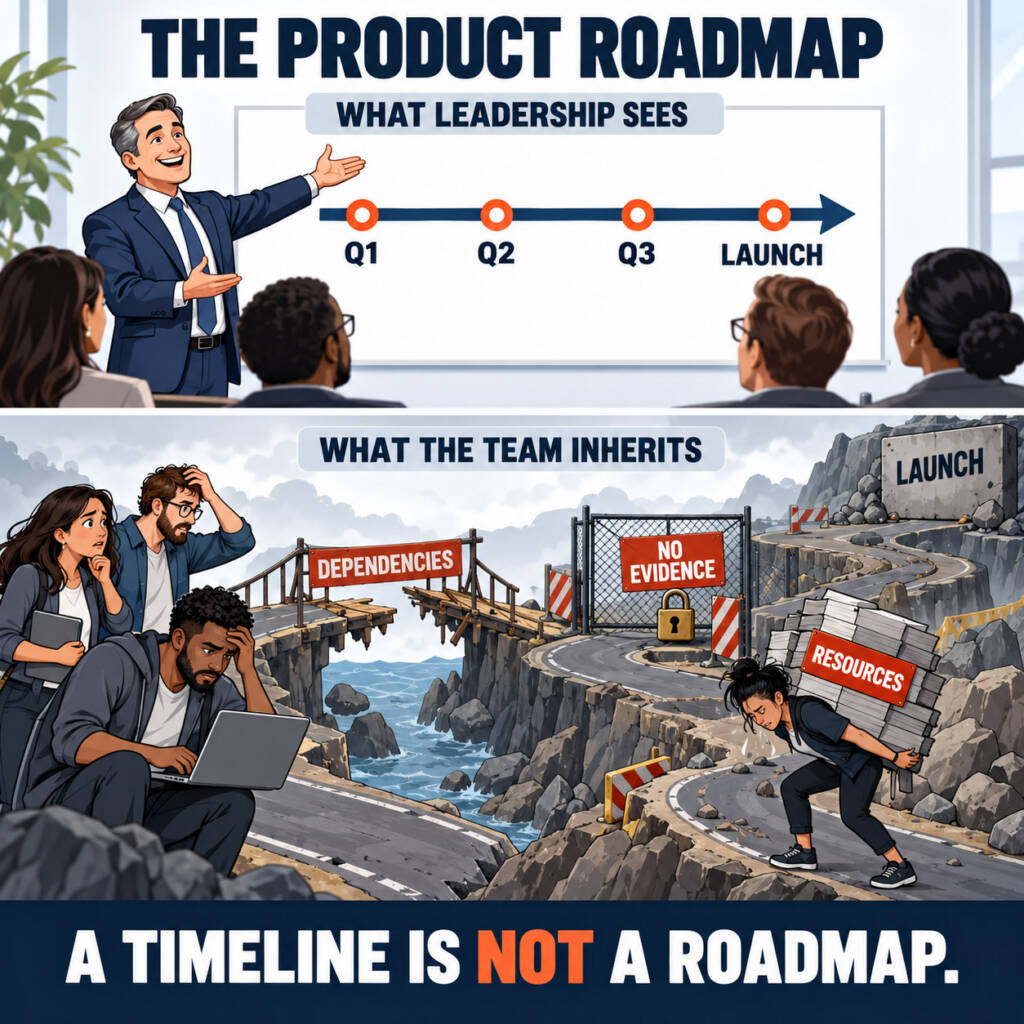
How to Build a Product Development Roadmap Teams Can Execute
How to Build a Product Development Roadmap Teams Can Execute A product development roadmap should help people make decisions. Too often, it becomes a presentation filled with attractive timelines, colored…

Product Management vs Project Management: Roles That Must Work Together
Product Management vs Project Management: Roles That Must Work Together Product management vs project management is often treated as a contest over ownership. It should not be. The two disciplines…
How Learning Organizations Turn Experience Into Capability
How Learning Organizations Turn Experience Into Capability Organizations do not learn simply because the people inside them gain experience. A learning organization turns what individuals discover—through decisions, experiments, failures, recoveries, and…
Business Doublespeak in Product Development
To Seem Rather Than to Be in Business and Product Development North Carolina I like North Carolina. I have spent many years here; it has a beautiful coast and nice…
Engineering Leadership During a Skills Shortage
Expanding Expert Capacity Without Lowering Standards The engineering skills gap is not simply a recruiting problem. It is a capacity, knowledge, and leadership problem. Organizations need experienced engineers who can…
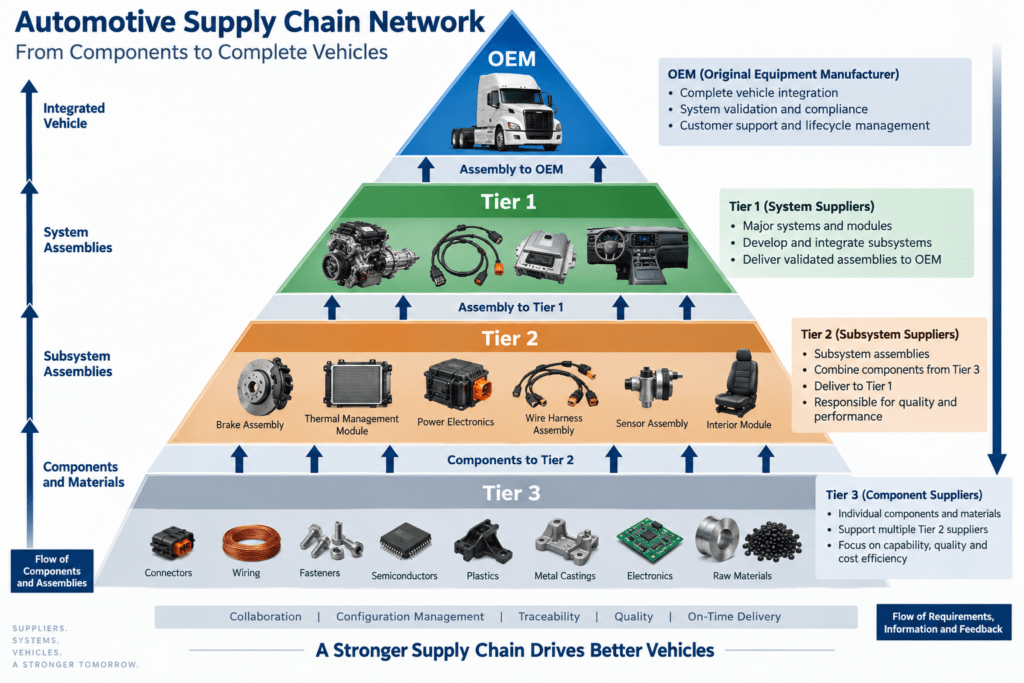
ASPICE Traceability Is More Than Linking Requirements:
ASPICE Traceability Is More Than Linking Requirements: Controlling Change Across the Automotive Supply Chain This post originates from a short exchange on LinkedIn with Yuchao Luo. We were chatting about the…
What Automotive and Embedded Systems Teach Us About Complex Projects
What Automotive and Embedded Systems Teach Us About Complex Projects Automotive and embedded product development provides a demanding classroom for complex project management. A modern vehicle or industrial system brings…

The Product Realization Engine: Design, Build, Test, Learn
The Product Realization Engine: Design, Build, Test, Learn Products do not move from idea to production in a straight line. Drawings are not completed once, prototypes are not built once,…
Bridging the Product Development Process Valley of Death
Closing the Valley of Death in the Product Development Process Promising product ideas do not always fail because they lack technical merit or market potential. Many stall because the organization…
Pascal’s Wager in Product Development: Understanding Product Verification Risk
Pascal’s Wager in Product Development: Understanding Product Verification Risk Blaise Pascal was a seventeenth-century French mathematician, physicist, inventor, and philosopher. Pascal’s Wager was not offered as proof that God exists.…
CMMI Tracking
[sdm_download id=”15558″ fancy=”0″]
Pugh Matrix
[sdm_download id=”15560″ fancy=”0″]
Contact Value Transformation about Requirements Management
Error: Contact form not found.