


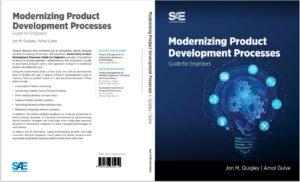
 Product Development Is a System, Not a Department
Why synchronized decisions outperform isolated functional handoffs
A product development system is not an organizational chart with engineering in one box, manufacturing in another, and quality waiting near the end. It is the coordinated set of decisions, information, people, suppliers, tools, and learning loops that moves an idea from an identified need to a reliable product in the customer’s hands.
After more than 30 years working in product development, embedded systems, automotive electronics, manufacturing, testing, quality, and project management, I have seen strong teams struggle for a simple reason: each department completed its work, but the product did not come together as a system. Local activity looked good. The total outcome did not.
The problem is rarely a lack of effort or expertise. The problem is synchronization. Requirements change without the architecture being reassessed. A supplier is selected before critical characteristics are understood. Test equipment arrives after design choices have narrowed the available options. Manufacturing learns about an assembly constraint when pilot parts reach the line. Service discovers a diagnostic gap after customers experience it. Each function may have followed its process, yet the product still fails at the interfaces.
Why the Department Model Breaks Down
Departments are necessary. They develop expertise, establish standards, and create accountability. But a department cannot optimize the complete product on its own. Product development crosses organizational boundaries as soon as a need becomes a requirement. The work is concurrent and interdependent, even when the schedule presents it as a clean sequence.
The traditional handoff model encourages each group to finish an artifact and pass it downstream: requirements to engineering, engineering to sourcing, sourcing to suppliers, design to manufacturing, and the finished product to test and quality. This creates the appearance of progress. It also delays discovery. A document can be complete while the decision behind it is still weak, untested, or incompatible with downstream realities.
The further a problem travels before it is exposed, the more it costs to correct. More importantly, the organization loses time it cannot recover. The team must reopen decisions, update drawings and software, change tooling, revise supplier orders, repeat verification, and restore confidence in the baseline. A late defect is often the visible result of an earlier system failure.
Product Outcomes Are Created at the Interfaces
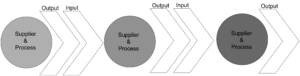
The most consequential risks often live between functions rather than within them. The engineering design may be technically correct, but can the supplier hold the tolerance? The component may pass a bench test, but does the test represent the operating environment? The prototype may work, but can manufacturing build it repeatedly, inspect it efficiently, and trace its configuration? The product may meet its specification, but does it deliver the outcome the customer actually values?
These interfaces are where a product development system either creates alignment or accumulates risk:
- Requirements and architecture: Customer needs must translate into clear, testable requirements and an architecture that can satisfy them without hidden conflicts.
- Architecture and supply chain: Component choices influence availability, lead time, obsolescence, cost, manufacturability, and supplier risk.
- Design and manufacturing: Drawings, tolerances, software releases, tooling, work instructions, error-proofing, and inspection methods must describe the same intended product.
- Verification and configuration: Test results are credible only when the team knows exactly which hardware, software, calibration, requirements, and test environment produced the evidence.
- Quality and service: Production data, field failures, warranty information, and service observations must return to engineering and product planning as usable learning.
What a Product Development System Includes
A reliable system does not eliminate functional ownership. It connects functional decisions to a common product outcome. Every group still has responsibilities, but no group operates as if its deliverable ends the process.
 Requirements and Customer Value
The system begins with the problem to be solved, not with a preferred technology. Requirements should define the needed behavior, constraints, interfaces, operating conditions, regulatory obligations, and measures of effectiveness. They must also remain traceable as the product changes. If a requirement cannot be connected to a design decision and a method of verification or validation, it is not yet controlling the work.
Architecture and Configuration Management
Architecture determines how the product’s elements work together. Configuration management protects that intent through revisions, baselines, bills of material, software versions, calibrations, and approved changes. This is not clerical administration. It is how the team ensures that suppliers build, manufacturing assembles, testing evaluates, and service supports the same product definition.
 Supply Chain and Supplier Capability
Suppliers are part of the development system, not a purchasing event. Their process capability, technical knowledge, capacity, lead times, tooling, quality controls, and change discipline affect the design from the beginning. Procurement decisions made before technical and quality risks are visible can lock the project into expensive compromises.
Manufacturing and Quality Planning
Manufacturing should not be asked merely to reproduce a completed design. Its knowledge should shape design choices, process flow, error-proofing, control plans, inspection methods, gauges, fixtures, and work instructions. DFMEA, PFMEA, control plans, measurement-system analysis, and process capability are connected forms of risk reduction. They are not independent documents prepared for a gate review.

Verification, Validation, and Test Evidence
Verification asks whether the product was built to its requirements. Validation asks whether the right product was built for the intended use. Both require planned evidence. Test methods, environments, instrumentation, fixtures, software, acceptance criteria, and data integrity should develop with the product. Waiting until the design is supposedly finished turns testing into defect discovery instead of decision support.
Service and Closed-Loop Learning
The system does not end at launch. Serviceability, diagnostics, repair procedures, replacement parts, field data, and customer feedback reveal how the product behaves in reality. That knowledge should inform corrective action, future revisions, and the next product. Without this loop, the organization repeatedly pays to relearn what it already experienced.
 Handoffs Hide Risk and Destroy Learning
Consider an embedded controller developed by several organizations. One group defines the requirements, another designs the electronics, another develops the software, suppliers provide components, a manufacturing team builds the assembly, and a separate laboratory performs testing. If those groups exchange documents without managing the complete configuration, diagnosing a failed system test becomes difficult. Was the defect caused by a requirement interpretation, a hardware revision, a software build, a supplier change, a calibration value, the test fixture, or the test procedure?
The technical work may be excellent inside every function. The failure comes from missing relationships. Systems thinking makes those relationships visible before the failure. It creates a known product composition, defined interfaces, traceable decisions, planned integration points, and a shared understanding of what the evidence means.
Transparency matters here. Bad news that arrives early is useful information. Bad news hidden until a milestone becomes schedule disruption. A healthy system makes uncertainty visible and gives the team permission to test assumptions while change is still affordable.
How Systems Thinking Changes Product Leadership
Leaders create the conditions for functions to work as one system. This requires more than asking people to collaborate. The operating model must make cross-functional work unavoidable, visible, and measurable.
- Define the shared outcome. Establish the customer result, business case, technical performance, quality expectations, timing, cost, and lifecycle constraints that the entire team must balance.
- Involve downstream knowledge early. Bring suppliers, manufacturing, test, quality, service, and support into decisions while alternatives are still available.
- Use evidence-based gates. A review should assess readiness, unresolved risk, assumptions, and evidence, not simply confirm that documents exist.
- Protect the baseline. Manage requirements, drawings, bills of material, software, calibration, test assets, and approved changes as connected configuration items.
-
- Create an integration cadence. Use cross-functional design reviews, risk reviews, build reviews, test-readiness reviews, and after-action reviews to expose interface problems and capture learning.
- Encourage constructive conflict. Disagreement about assumptions, interfaces, evidence, and alternatives can strengthen the product when the team separates the problem from the people involved.
Measure the Flow of Value, Not Just Department Activity
A department can meet its local targets while the project misses the market window or launches with quality problems. Metrics therefore need to show how well decisions and work move through the entire product development system. Useful measures may include:
- Requirements stability and traceability: How many requirements remain unclear, unverified, or affected by unresolved changes?
- Interface and integration defects: Where are mismatches being found, and how late in the lifecycle are they discovered?
- Change cycle time: How long does it take to assess, approve, communicate, implement, and verify a change across every affected configuration item?
- Supplier and manufacturing readiness: Can the selected processes repeatedly meet critical characteristics at the required capacity and timing?
- Test coverage and evidence maturity: Which requirements have credible evidence, which rely on assumptions, and which remain exposed?
- First-pass yield and defect escape: What does production reveal about design and process robustness, and what is reaching the customer?
- Issue age and recurrence: Are problems being permanently resolved, or merely moved between departments and project phases?
How to Strengthen the Product Development System
Improvement should begin with how work actually flows, not how the official procedure says it flows. A process map or value-stream map can expose wait states, rework loops, missing decisions, duplicate data entry, late approvals, and unclear ownership. The purpose is not to add bureaucracy. It is to remove the friction that prevents sound technical and business decisions.
- Map the current flow. Follow a real product change or launch from need through service. Include decisions, queues, rework, information systems, and supplier interactions.
- Identify the critical interfaces. Find the points where incomplete information, ambiguous ownership, or incompatible tools create delays and defects.
- Clarify integration ownership. Name who is responsible for the product-level outcome, not merely the completion of functional tasks.
- Connect risk artifacts to action. Link requirements, FMEAs, test plans, control plans, supplier controls, and corrective actions so that one body of evidence informs the next.
- Shorten learning cycles. Use models, prototypes, simulations, early supplier builds, equipment trials, and incremental verification to expose uncertainty sooner.
- Close the feedback loop. Feed manufacturing, test, service, warranty, and customer evidence back into design decisions and future programs.
The System Must Fit the Work
Systems thinking does not require one project-management method. Some product elements benefit from Agile iterations. Long-lead tooling, regulatory approvals, capital equipment, and supplier commitments may require a more predictive approach. Complex products often need a hybrid model. The method should match the uncertainty, cost of change, technical risk, and dependencies involved.
The need for synchronization cannot change. Rapid software iterations are not helpful if they break an uncontrolled hardware interface. A detailed manufacturing schedule does not protect the launch if requirements remain unstable. Speed in one part of the system can create delay elsewhere when the dependencies are ignored.
Product Development Is an Enterprise Capability
The strongest organizations do not treat product development as something engineering does before manufacturing takes over. They treat it as an enterprise capability that connects strategy, product management, project management, engineering, suppliers, manufacturing, test, quality, service, and the customer.
A mature product development system does not guarantee that every assumption will be correct. It ensures that assumptions are visible, tested, and corrected before they become expensive failures. It replaces isolated handoffs with coordinated decisions and turns each build, test, defect, and customer observation into learning.
Products succeed when the whole system succeeds. The question for leaders is not whether every department completed its work. The better question is whether the organization created the alignment, evidence, and learning required to deliver a product that works reliably for the customer.

For more information, contact us:
The Value Transformation LLC store.
Follow us on social media at:
Amazon Author Central https://www.amazon.com/-/e/B002A56N5E
Follow us on LinkedIn: https://www.linkedin.com/in/jonmquigley/
https://www.linkedin.com/company/value-transformation-llc
Follow us on Google Scholar: https://scholar.google.com/citations?user=dAApL1kAAAAJ
