

Pascal’s Wager in Product Development: Understanding Product Verification Risk
Blaise Pascal was a seventeenth-century French mathematician, physicist, inventor, and philosopher. Pascal’s Wager was not offered as proof that God exists. Instead, it was an argument about how a person might make a consequential decision when certainty is unavailable. In simplified terms, Pascal proposed that belief carried a limited cost if it proved incorrect, while disbelief could carry an immeasurable cost if it proved incorrect. The wager concerns uncertainty, consequences, and the asymmetry between what is invested and what might be lost. This is where product verification risk applies.
| Choice | God exists | God does not exist |
|---|---|---|
| Believe in God | Potentially receive infinite reward | Incur a limited earthly cost |
| Do not believe | Risk infinite loss | Receive only a limited earthly benefit |
I used this thinking long before I heard of Pascal and his wager, comparing the gains of an action with the potential loss of not taking it.
Product development teams make their own versions of this wager every day. We decide whether to build another prototype, test another interface, challenge another assumption, repeat a durability test, or release the product with the evidence already available. These decisions define product verification risk: the risk created by what we choose to verify, how well we verify it, and what we release without sufficient evidence.
The question is not simply, “Can we afford another test?” A better question is, “What are we wagering if we do not perform it?”
 Product Development Is a Series of Wagers
We probably first heard this “bet” approach to product development in the writings of John Cutler. It has been many years since we worked on a few artifacts together. I like this analogy: every product begins with incomplete information, and money applied is like a bet. Requirements may contain gaps. Customer needs may be misunderstood. New technology may not behave as expected. Suppliers may interpret specifications differently. Manufacturing variation may reveal weaknesses that were not visible in a laboratory or prototype build.
Whether we admit it or not, we are making wagers that:
- The requirements are complete, correct, feasible, and understood.
- The selected technology is sufficiently mature.
- Compone
- nts and software will interact correctly.
- Suppliers will deliver the intended capability and quality.
- Manufacturing processes will consistently produce conforming parts.
- The product will survive its actual operating environment.
- Customers will use the product as anticipated.
- The verification strategy will detect meaningful defects before release.
These assumptions are not automatically bad. Product development would be impossible without assumptions. The problem begins when assumptions are treated as facts, remain invisible, or survive after contrary evidence appears.
That is why transparency matters. A transparent development process identifies what is known, what is assumed, what remains unknown, and what evidence would change the team’s decision. Without that transparency, the organization is still wagering—it simply does not understand the bet it has placed.
The Cost of Good and Poor Quality
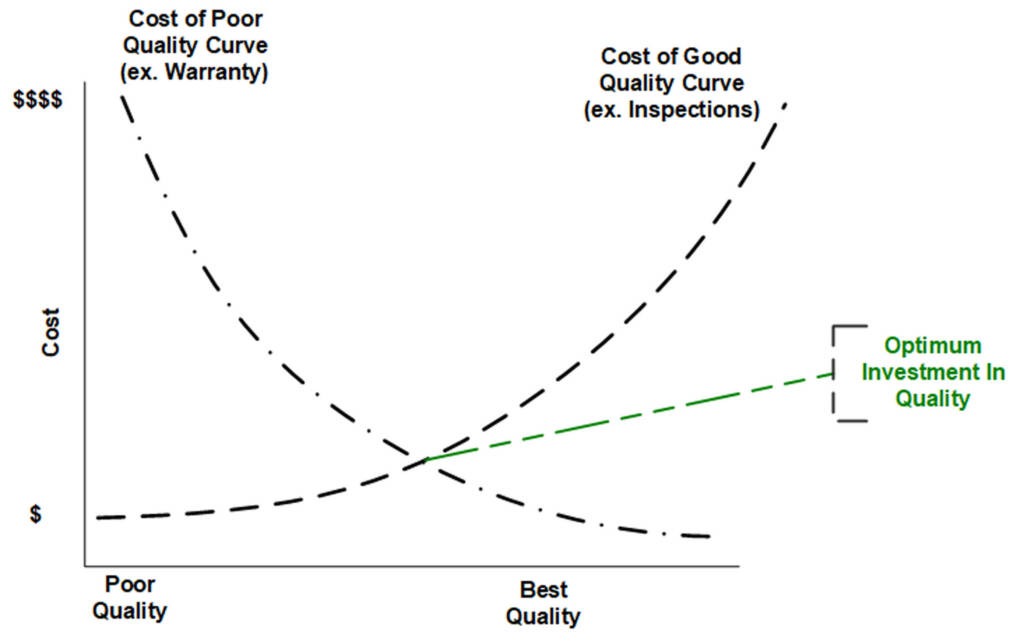
The economics of the wager become clearer when we distinguish between the cost of good quality and the cost of poor quality.
The cost of good quality is the money and effort deliberately invested to prevent defects and evaluate whether the product and process meet their requirements. It is sometimes called the cost of conformance. It includes prevention and appraisal activities such as:
- Requirements reviews and design reviews
- Training and process development
- Prototypes, simulations, and engineering analyses
- Supplier qualification and development
- DFMEA, PFMEA, and control-plan development
- Test equipment, fixtures, gauges, and measurement-system analysis
- Design verification, process validation, and production-readiness reviews
- Inspections, audits, and configuration controls
These costs are usually visible. They appear in budgets, schedules, purchase orders, laboratory time, engineering hours, and project reviews. Because they are visible, they are frequently challenged.
The cost of poor quality is the cost created when requirements are misunderstood, defects are produced, or problems escape detection. It is also called the cost of nonconformance. It includes internal and external failure costs such as:
- Scrap, rework, sorting, and retesting
- Engineering changes made late in development
- Supplier containment and expedited freight
- Production downtime and launch delays
- Warranty claims, field service, and recalls
- Regulatory exposure and potential liability
- Lost customers and damage to the company’s reputation
- Management attention diverted from future products
The cost of poor quality is often underestimated because it is fragmented across departments and delayed in time. A reduced test budget may appear as a project saving, while the later warranty campaign appears in a different budget under a different manager. The organization celebrates the visible saving without connecting it to the much larger downstream loss.
The cost of good quality is an investment made with intention. The cost of poor quality is often a debt incurred without full awareness of the interest that will eventually be paid.
Product Verification Risk Changes the Economics of the Wager
The product-development version of Pascal’s Wager can be summarized by comparing two choices: verify adequately or release with limited verification. Neither decision guarantees success or failure, but the consequences are not symmetrical.
| Decision | Product performs correctly | Product contains a significant defect |
|---|---|---|
| Verify adequately | The organization incurs a controlled verification cost and gains evidence supporting release. | The defect may be discovered while corrective action is still manageable. |
| Reduce or skip verification | The organization appears to save time and money, but has less evidence supporting the decision. | Production, the customer, or the market may discover the defect after the cost and consequences have increased. |
This does not mean every possible test should be conducted. Infinite testing is neither possible nor useful. It means that the decision to stop testing should be based on risk, coverage, evidence, and defined acceptance criteria—not schedule pressure, optimism, or the absence of a failure so far.
Verification asks whether the product was built correctly against its requirements. Validation asks whether the right product was built for its intended use. A product can pass its written requirements and still disappoint the customer if those requirements were incomplete or incorrect. Managing product verification risk therefore requires both disciplines: credible evidence of conformance and credible evidence that the product will be effective in its intended environment.
Transparency Makes the Wager Visible
Transparency does not mean flooding leaders with reports or displaying a dashboard full of green indicators. It means accurately communicating the product’s condition, the quality of the evidence, and the remaining uncertainty. It is at least part of whether to undertake or continue the bet or not.
A transparent team makes distinctions among:
- Facts: Results supported by traceable observations, measurements, or verified records.
- Assumptions: Conditions accepted temporarily so work can proceed, but which still require confirmation.
- Unknowns: Questions for which the team does not yet have adequate information.
- Decisions: Choices made using the evidence and constraints available at a specific time.
- Risks: Potential outcomes, their consequences, and the actions being taken in response.
This requires more than honest conversation. It requires working mechanisms: requirements traceability, decision logs, configuration identification, change control, test reports, issue tracking, and clear entry and exit criteria. A test result is meaningful only when the team knows what requirement was evaluated, what product configuration was tested, what method was used, what conditions existed, and whether the result met a defined criterion.
Transparency also requires the freedom to report inconvenient information. If a team believes that raising a concern will be treated as disloyalty or poor performance, assumptions and defects will remain hidden. The wager then becomes distorted because decision-makers are evaluating an artificially favorable picture of the product.
Iteration and Learning Change the Wager
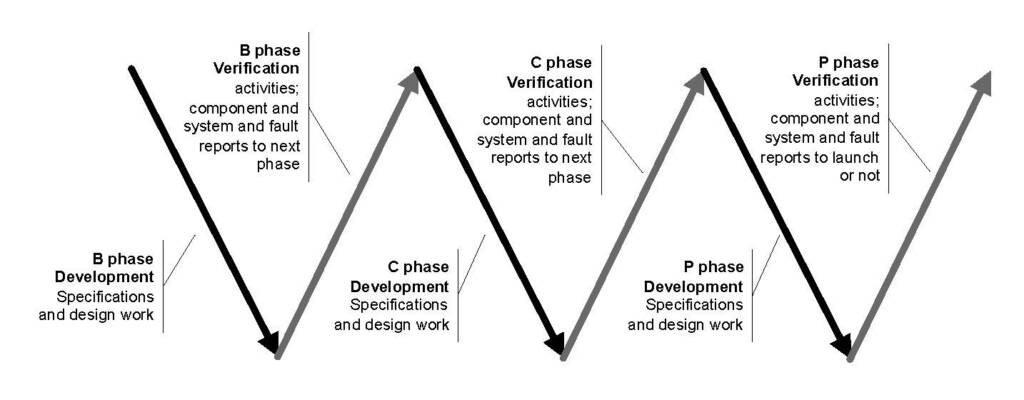
Pascal’s original wager is often presented as a single choice under uncertainty. Product development is more dynamic. We can run experiments, build prototypes, inspect parts, analyze data, test interfaces, and revise the design. Each iteration gives us an opportunity to change the odds.
An iteration is valuable when it produces learning. A prototype is not merely a smaller version of the final product; it is a tool for answering specific questions. A test build is not simply progress toward production; it is an opportunity to expose weaknesses in the design, assembly sequence, tooling, work instructions, inspection method, or supply chain.
 Useful learning cycles should:
- Identify the assumption or uncertainty being evaluated.
- Define the evidence needed to support a decision.
- Establish the product and test configuration.
- Use measurable acceptance criteria.
- Capture unexpected results rather than explaining them away.
- Feed the learning back into requirements, designs, FMEAs, control plans, and future tests.
- Record why the next decision changed—or why it did not.
Iteration without learning is just repetition. If the same defects recur, if lessons never reach the requirements or control plan, or if changes are made without updating the configuration baseline, the organization is spending money without reducing uncertainty.
Iterations can also reveal that the wager is worse than originally believed. A prototype may expose an unexpected interface problem. A supplier trial may demonstrate excessive variation. Environmental testing may reveal that a technology-readiness assumption was optimistic. This is not a failure of iteration. It is the iteration doing its job by replacing confidence based on hope with evidence that can guide action.
Early iterations usually provide the least expensive opportunities to learn. When evidence arrives after tooling is complete, suppliers have launched, inventory has accumulated, and customers are waiting, the same design change becomes slower and more expensive. Iterative development changes product verification risk by moving discovery to a point where the organization still has choices.
 When Nothing Fails, Was the Test Worthwhile?
Engineering is about margin; from experience, one might come to the conclusion that this understanding of margin and the need for it has been lost. In fact, from what I have seen, the Ocean Gate failure is at least in part due to margins.
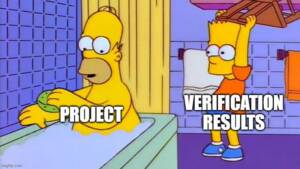
A recurring mistake is to treat a test that finds no defect as wasted effort. If the product passed, some will argue that the test was unnecessary. That conclusion confuses the absence of a discovered failure with the absence of risk.
A well-designed passing test can provide valuable evidence, but only when:
- The test is connected to a clear requirement, risk, or hypothesis.
- The test conditions reasonably represent the expected operating environment.
- The instrumentation and measurement system are capable.
- The tested configuration is known and representative.
- The sample size and coverage are appropriate for the decision.
- The method could actually reveal the failure under investigation.
- Results, anomalies, assumptions, and limitations are reported transparently.
A poorly constructed test may produce a passing result while providing little useful evidence. The product may have been tested under conditions that were too mild, for too short a duration, with the wrong configuration, or against an ambiguous acceptance criterion. Passing such a test can be more dangerous than not testing because it creates false confidence.
Testing is not valuable merely because it occurred. Its value comes from the quality of the question, the credibility of the method, and the strength of the evidence produced.
 Not Every Product Requires the Same Verification Investment
The analogy to Pascal’s Wager should not justify unlimited testing. Product development requires judgment. Verification effort should be proportional to both uncertainty and consequence. We believe a range of testing approaches should be employed to explore the product and its development. Our approach and specific test cases will be commensurate with the endeavor.
The team should consider factors such as:
- Failure severity and potential safety consequences
- Probability of occurrence and ability to detect the failure
- Technical novelty and technology readiness
- Manufacturing readiness and expected process variation
- Software, hardware, and supplier-interface complexity
- Regulatory, contractual, and cybersecurity obligations
- Environmental and use-case variability
- Ability to correct or update the product after release
- Warranty, recall, and reputational exposure
A cosmetic concern and a safety-critical control function should not receive the same verification strategy. Likewise, a mature component used within a proven operating envelope may not require the same investigation as a new technology, an unfamiliar supplier, or an unprecedented system interface.
Risk-based verification helps the organization spend its cost-of-good-quality resources where they create the most valuable evidence. The objective is not maximum testing. It is sufficient, credible, and traceable evidence for the decision being made.
 Pascal’s Wager Is an Analogy, Not an Engineering Method
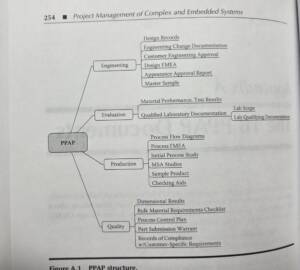
Pascal’s Wager provides a useful way to discuss decisions with asymmetric consequences, but it cannot replace engineering analysis. Product decisions involve multiple failure modes, competing risks, uncertain probabilities, limited resources, and consequences that change throughout the development lifecycle.
The actual work still requires disciplined methods, including:
- Requirements analysis and traceability
- DFMEA, PFMEA, and fault-based analysis
- Risk-based verification and validation planning
- Technology and manufacturing readiness assessments
- Measures of Performance and Measures of Effectiveness
- Design reviews and production-readiness reviews
- Configuration management and change control
- Transparent reporting of evidence, assumptions, and residual risk
The wager starts the conversation. Engineering discipline determines what to test, how much evidence is enough, and who has the authority to accept the remaining risk.
 The Real Wager Happens Before Release
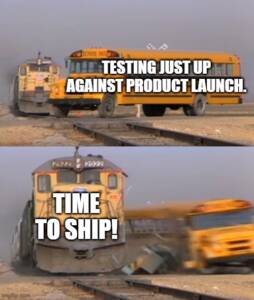
Organizations sometimes act as though testing creates problems because tests reveal defects and threaten schedules. The defect, however, existed before the test exposed it. Verification did not create the problem. It created the opportunity to understand and correct the problem before the customer experienced it.
The real choice is rarely between spending money and spending nothing. It is a choice between investing in prevention, verification, iteration, and learning now—or accepting the possibility of paying for poor quality later, when fewer options remain and the consequences are greater.
Transparency makes the assumptions visible. Iteration gives the team opportunities to learn. Verification converts selected assumptions into evidence. Together, they change the wager from an act of faith into a managed engineering decision.
The most important question, then, is not, “Can we afford to verify the product?” It is this:
What are we willing to wager on releasing it without sufficient evidence?

For more information, contact us:
The Value Transformation LLC store.
Follow us on social media at:
Amazon Author Central https://www.amazon.com/-/e/B002A56N5E
Follow us on LinkedIn: https://www.linkedin.com/in/jonmquigley/
https://www.linkedin.com/company/value-transformation-llc
Follow us on Google Scholar: https://scholar.google.com/citations?user=dAApL1kAAAAJ
