


How Learning Organizations Turn Experience Into Capability
Organizations do not learn simply because the people inside them gain experience. A learning organization turns what individuals discover—through decisions, experiments, failures, recoveries, and successful deliveries—into capability others can find, understand, and reuse.
That distinction matters in product development, project management, and quality. An experienced engineer may know why a particular interface is vulnerable. A project manager may recognize the early signs of a supplier delay. A quality leader may understand which test exposes a hidden failure mode. However, if that knowledge remains in a person’s memory, notebook, or private spreadsheet, the organization has not learned. It has merely rented experience until that person moves to another assignment or leaves the company.
Organizational learning requires a deliberate system. Decision journals, after-action reviews, knowledge pull, requirements traceability, and short learning cycles provide the machinery that converts experience into repeatable performance.
 Experience Is an Event; Capability Is a System
Experience begins with exposure to an event. A team makes a decision, executes a plan, and observes the result. The people involved may learn a great deal, but individual insight does not automatically change how the next team works.
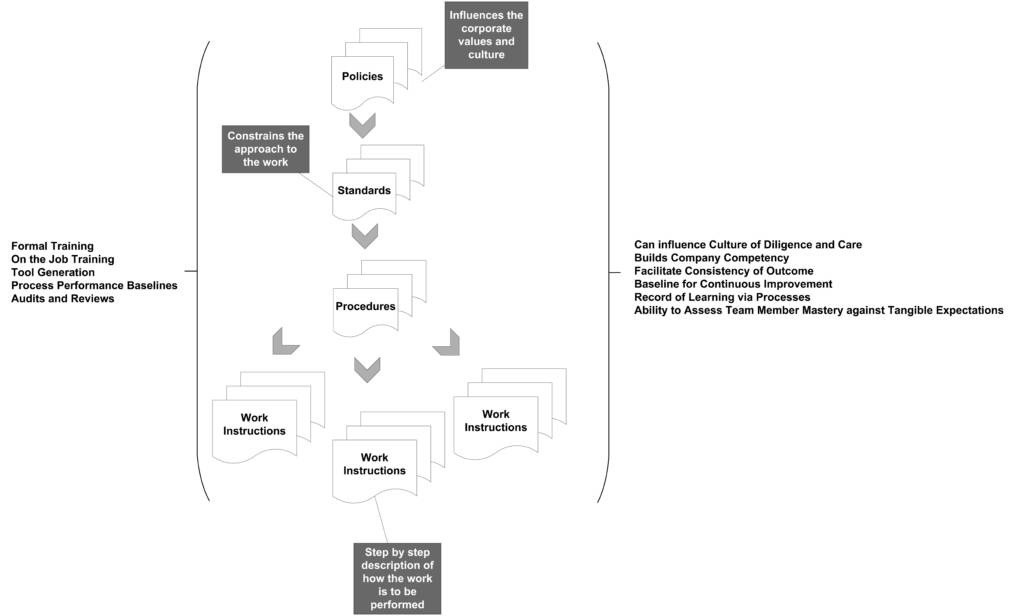
Capability exists when the lesson changes something durable. It may improve a requirement, design standard, estimating model, test method, supplier checklist, FMEA, control plan, training module, or decision rule. The knowledge becomes part of the work instead of remaining a story told by someone who happened to be there.
A useful way to express the difference is:
Experience + reflection + traceability + reuse = organizational capability.
Remove any part of that chain and learning becomes fragile. Experience without reflection produces anecdotes. Reflection without documentation disappears. Documentation without access becomes an archive. Access without application produces no change in performance.
Why Organizations Repeat Lessons They Have Already Learned

Most organizations have no shortage of experience. They have project files, meeting minutes, test reports, corrective actions, risk registers, and lessons-learned databases. Yet the same problems keep appearing.
The problem is seldom the complete absence of information. More often, the information is disconnected from the next decision.
Common failure patterns include:
- Reviews conducted months after the important decisions were made.
- Lessons recorded without the context needed to understand them.
- Teams documenting what happened but not why they made the original choice.
- Databases organized around completed projects rather than future work.
- Corrective actions closed administratively without changing a requirement or process.
- Knowledge pushed broadly through presentations and emails instead of pulled when a team needs it.
- No owner assigned to convert the lesson into a reusable organizational asset.
A document repository can store information. It cannot, by itself, create a learning organization. The objective is not to save more documents. The objective is to improve future decisions and execution.
Decision Journals Preserve the Reasoning

Project records often capture the final decision but omit the reasoning behind it. Six months later, a team can see what was selected but may not know which alternatives were considered, which assumptions were accepted, or what evidence influenced the choice.
A decision journal closes that gap. It does not need to be complicated. For consequential decisions, record:
- The decision and the person or group accountable for it.
- The alternatives considered.
- The assumptions believed to be true at the time.
- The evidence available—and the evidence that was missing.
- The expected result.
- The principal risks and uncertainties.
- The conditions that would cause the team to revisit the decision.
- The date when the outcome will be reviewed.
This creates more than an audit trail. It separates decision quality from outcome quality. A sound decision can still produce a poor result when uncertainty resolves unfavorably. Conversely, a weak decision can appear successful because the team was lucky. Without the original reasoning, organizations often reward luck and punish responsible experimentation.
Decision journals allow teams to calibrate judgment. Over time, they reveal recurring optimism, ignored interfaces, weak estimates and assumptions that are consistently unreliable.
After-Action Reviews Convert Outcomes Into Lessons
 An after-action review should occur close enough to the event that evidence and context remain available. It should not wait until the end of a long program, when memories have faded, and the people closest to the work may already be assigned elsewhere.
The review can begin with four questions:
- What did we expect to happen?
- What actually happened?
- What explains the difference?
- What will we change before the next similar decision or activity?
The fourth question is where reflection becomes capability. If the answer does not alter a standard, requirement, checklist, test, role, tool or decision rule, the organization may have discussed the lesson without learning it.
An effective review is candid without becoming personal. Psychological safety does not mean avoiding accountability. It means that people can expose assumptions, errors and weak signals without fearing that honesty will be used against them. Accountability still matters, but it is directed toward understanding the system and improving the next outcome.
Learning Organizations Rely on Knowledge Pull
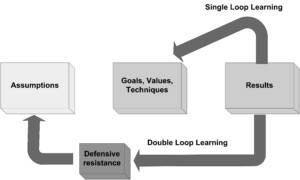
Many knowledge-management efforts are built around knowledge push. Employees receive presentations, newsletters, training sessions and links to large repositories. Some of this is useful, but people cannot retain every lesson that might someday become relevant.
Knowledge pull is different. It makes prior learning available at the moment of need.
Before a design review, sourcing decision, project estimate, or verification plan is approved, the team should be able to retrieve relevant evidence from similar products and projects. That requires knowledge to be organized around the work people are about to perform—not merely around the project that produced it.
Useful retrieval categories may include:
- Product architecture and interfaces.
- Technology or manufacturing process.
- Failure mode and root cause.
- Supplier or commodity type.
- Lifecycle phase.
- Requirement type.
- Verification method.
- Assumption and decision category.
The test of a knowledge system is not how much content it contains. The test is whether a team can find the right lesson before it repeats the old mistake.
Requirements Traceability Makes Learning Executable
Requirements traceability is usually discussed as a way to show that requirements have been designed, implemented, and verified. It also provides one of the strongest mechanisms for organizational learning.
Suppose testing reveals that an electronic module resets during a transient condition. A weak response corrects the immediate design and c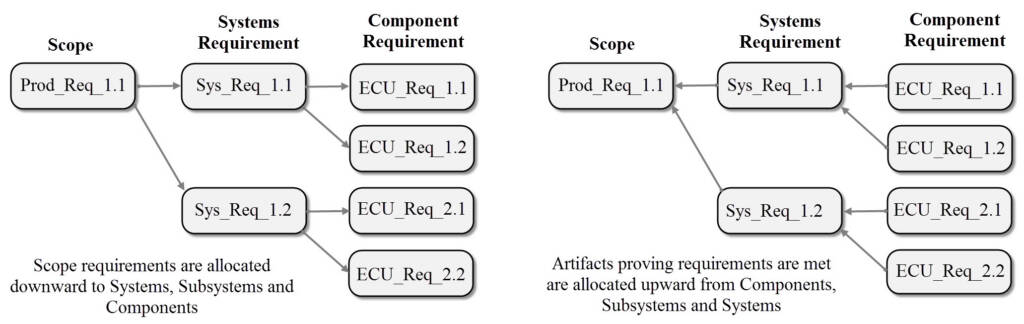 loses the issue. A stronger response traces the learning through the system:
- The failure and its operating conditions are documented.
- The underlying assumption is identified.
- The system or component requirement is revised.
- The architecture or design guideline is updated.
- The DFMEA reflects the failure mode and controls.
- The verification method includes the relevant transient condition.
- Supplier specifications and acceptance criteria are aligned.
- The result is linked to the evidence that prompted the change.
The lesson is no longer dependent on someone remembering the incident. It is embedded in the technical baseline and is available to future products, variants, and projects.
Traceability also prevents indiscriminate standardization. A lesson learned in one context may not apply everywhere. By preserving its source, assumptions, and boundaries, teams can determine whether the knowledge transfers to the next application.
Short Learning Cycles Improve Decisions While They Still Matter
Long projects often defer learning until a final review. That may help a future project, but it does little for the one still consuming time and money.
Short learning cycles bring reflection into the operating cadence. A team can run a small experiment, review the evidence, update its assumptions, and adjust the next increment. The cycle may surround a prototype build, supplier sample, software release, test sequence, design review or production trial.
The practical loop is straightforward:
- State the assumption or question.
- Define the evidence required.
- Perform the smallest meaningful activity that can produce that evidence.
- Compare the result with the expectation.
- Record the decision and what was learned.
- Update the relevant requirement, plan, risk, or process.
- Apply the change in the next cycle.
This is not an argument for uncontrolled iteration. In complex and embedded systems, learning must remain connected to configuration management, interfaces, requirements, and verification evidence. Short cycles create speed because they reveal errors earlier—not because they remove discipline.
From a Local Failure to Reusable Capability
Consider an intermittent connector problem discovered late in vehicle testing. The immediate team can repair the harness and continue the test. That solves today’s interruption, but it does not prevent recurrence.
A learning organization goes further. The team records the original selection decision and assumptions. The after-action review identifies the overlooked load, vibration, sealing, or assembly condition. The DFMEA and PFMEA are updated where appropriate. The drawing, terminal specification, crimp requirements, work instruction, and verification method are revised. Supplier acceptance evidence is clarified. The finding is tagged so another team selecting a similar connector can retrieve it during design review.
The event has now produced capability. The organization has converted one team’s disruption into better decisions across future products and programs.
Leadership Determines Whether Learning Survives
Leaders often say they want lessons learned while rewarding only immediate delivery. Teams notice that contradiction. If every hour is committed to execution, reflection becomes optional. Raising a concern creates political trouble; weak signals remain hidden. If schedules never account for updating standards and tools, corrective action stops with the current problem.
Executives, PMOs and quality leaders can create the conditions for learning by:
- Reserving time for short reviews during the work, not only at the end.
- Requiring decision rationale for significant technical and commercial choices.
- Assigning an owner and due date for converting lessons into reusable controls.
- Connecting corrective actions to requirements, FMEAs, test methods and work instructions.
- Making relevant knowledge searchable at the point of decision.
- Rewarding people who surface uncertainty and prevent recurrence.
- Reviewing whether previous lessons were used at project and design gates.
Metrics should focus on use and effect rather than the number of documents created. Useful measures include the recurrence rate of known failure modes, time required to locate relevant prior evidence, percentage of critical decisions with documented assumptions, closure time for systemic actions, and the rate at which lessons produce changes to controlled artifacts.
A Learning Organization Changes the Next Outcome
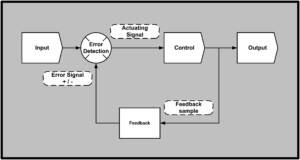
Organizational learning is not a library, a meeting, or a database. It is the capability to change future behavior based on past evidence.
Decision journals preserve why choices were made. After-action reviews convert outcomes into insight. Knowledge pull brings that insight to the next point of need. Requirements traceability embeds it into the product and process. Short learning cycles make improvement available while the work is still underway.
Experience is valuable, but experience alone is temporary. Capability emerges when the organization can retain what individuals discover, challenge it, connect it to the work, and use it to produce a better result the next time.

For more information, contact us:
The Value Transformation LLC store.
Follow us on social media at:
Amazon Author Central https://www.amazon.com/-/e/B002A56N5E
Follow us on LinkedIn: https://www.linkedin.com/in/jonmquigley/
https://www.linkedin.com/company/value-transformation-llc
Follow us on Google Scholar: https://scholar.google.com/citations?user=dAApL1kAAAAJ
