


Executive Decisions and Product Launch Failure
Most executives do not wake up in the morning intending to launch a defective product.
They are not trying to damage customer trust. They are not attempting to trigger recalls, incur warranty costs, or cause reputational damage. Most are attempting to balance delivery schedules, investor expectations, internal politics, manufacturing commitments, and financial performance.
I write this because I have had a LinkedIn exchange with Kevin Daily that could lead one to believe that I hold executives in some disregard. I promise you I do not. However, I have at least two anecdotal examples that suggest there is more to it, and poor launches continue to happen.
Why?
Because many executive decision failures are not rooted in malicious intent. They are rooted in distorted visibility, organizational filtering, and human psychology.
The problem is often not the absence of intelligence. The problem is the absence of meaningful information presented in a way that supports sound judgment.
 Executive Decision Failures Often Begin with Poor Data
One of the most dangerous statements in product development is:
“We have not found any major defects.”
That statement sounds reassuring until someone asks:
“How much testing has actually been completed?”
A lack of discovered defects does not mean quality exists. Frequently, it means testing coverage is inadequate, immature, incomplete, or poorly structured.
Organizations sometimes unintentionally create dashboards designed to comfort leadership rather than inform it.
Testing results become simplified into:
- Green indicators
- Smiley faces
- Percent complete metrics
- Executive summary charts
- Traffic-light reporting
The real engineering complexity disappears.
Critical questions often remain unanswered:
- What has not been tested?
- What environments remain unknown?
- What assumptions exist within the test strategy?
- What configurations were excluded?
- What failure modes were intentionally deferred?
- What defects were accepted as “manageable”?
This is where executive decision failures begin to emerge. The executive may believe the product is healthy because the reporting system was engineered to reduce discomfort rather than expose risk.
Asking Questions = Obstructionist?
A company had a manufacturing line that created customer-specific vehicle variants. These systems were not engineered into the vehicle by the vehicle development team, but by manufacturing engineers. At one point, there was a push to move this customer-engineered system to a data book order, which meant a design engineering-sanctioned version of the system. Rather than just accept this manufacturing system transferred to the order book, I asked questions about the present production of the system, some of which are found below:
- How many are built annually?
- What is the failure rate?
- What are the failure modes?
- Costs associated with rework?
An executive took me aside and said I was gaining a reputation for obstructionism. I told him these were prudent questions to answer before unleashing this on our customers at large, especially if our engineering departments would be required to provide financial and engineering support. Later, the questions were ultimately asked and answered, and the design was not transferred to the order book because of cost of quality concerns. My questions saved the company millions of quality dollars, and the desire to have those questions answered – with data- branded me an obstructionist. That executive did not come back to me and retract the obstructionist brand. In this case, the questions and the need for answers grudgingly paused a would-be costly project to gather information.
 Data Without Context Creates Dangerous Confidence
Organizations collect enormous amounts of data.
The issue is rarely the absence of information.
The issue is ineffective presentation.
A severe defect buried inside a 300-line spreadsheet has almost no executive visibility. Likewise, presenting aggregate metrics without criticality rankings creates a false sense of stability.
For example:
- 500 low-level cosmetic defects may appear catastrophic numerically
- One intermittent braking software issue may appear statistically insignificant
But the second issue can destroy lives, brands, and companies.
Without meaningful risk prioritization, leadership cannot properly distinguish:
- Noise versus signal
- Variation versus instability
- Cosmetic annoyance versus catastrophic failure
- Contained issue versus systemic exposure
Executives often receive distilled summaries stripped of engineering nuance. Over time, organizations unintentionally create “risk compression,” where highly critical concerns appear operationally equivalent to trivial issues.
The result is predictable:
Executive decision failures occur because the severity landscape was obscured.
Success Can Become a Cognitive Liability
One of the more uncomfortable realities in leadership is this:
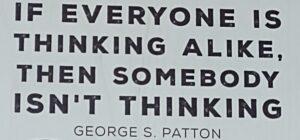
Past success can impair future judgment.
Executives who have repeatedly delivered profitable launches often develop strong confidence in their instincts. That confidence is understandable. Experience matters.
However, success can also create a dangerous psychological condition:
“I know how this works.”
This creates several organizational problems:
- Experienced leaders may discount technical warnings
- Schedule pressure may override engineering caution
- Confirmation bias begins filtering inconvenient information
- Contradictory evidence becomes interpreted as pessimism
- Teams become hesitant to challenge leadership assumptions
Eventually, the organization stops communicating risk honestly.
Not because employees are dishonest.
But because they learn which messages are rewarded and which messages create friction.
A mature risk culture requires psychological safety. Teams must be able to communicate uncomfortable truths without fear of political consequences.
Without that environment, executive decision failures become increasingly probable.
 Internal Politics and Bonuses Distort Product Launch Decisions
Many launch decisions occur under intense organizational pressure.
Executives are evaluated on:
- Revenue timing
- Launch milestones
- Quarterly performance
- Market commitments
- Investor expectations
- Public reputation
- Competitive positioning
- Incentive compensation and bonuses
This creates a dangerous asymmetry.
The immediate organizational rewards for launching on time are highly visible.
The future consequences of poor quality are often delayed.
Warranty costs emerge later.
Customer dissatisfaction emerges later.
Brand erosion emerges later.
Regulatory scrutiny emerges later.
Human beings naturally discount delayed consequences relative to immediate rewards. Organizations are no different.
Under pressure, teams begin rationalizing risk:
- “We can patch it later.”
- “The probability is low.”
- “Customers probably will not encounter this condition.”
- “We need to hit the launch date.”
- “The competitor is moving faster.”
- “Manufacturing is already committed.”
This is not necessarily incompetence.
It is often organizational survival behavior.
Unfortunately, executive decision failures frequently emerge from these cumulative compromises.
Testing Organizations Must Learn to Communicate Risk Better
Engineering and testing teams also share responsibility.
Too often, technical organizations communicate in ways executives cannot operationalize.
Massive spreadsheets.
Undifferentiated defect lists.
Technical jargon without business impact.
Metrics without interpretation.
Incomplete traceability between risks and customer consequences.
 Executives require translation layers between:
- Technical defects
- Operational exposure
- Financial impact
- Brand risk
- Safety implications
- Regulatory consequences
Effective testing organizations communicate:
- Severity
- Exposure probability
- Detectability
- Operational impact
- Customer visibility
- Safety implications
- Confidence intervals
- Known unknowns
Good testing does not simply generate data.
Good testing creates decision-quality information.
Gate Pressure
A very large vehicle project was moving through the development process. One of the suppliers was internal to the company – an engine supplier. The suppliers’ deliveries for systems integration were often late, and the feature content was unknown (no release notes or road map). The verification work was difficult without knowing the features and functions available in the iterations. In addition to this uncertainty, the testing was rife with defects, some of which were severe. The executives from that part of the company came to visit me and “chat” about the many defects being submitted, in an attempt to suppress these defects in advance of the upcoming gate. It would be difficult to pass a gate. Moreover, the metaphorical dirty laundry would be exposed during this review with the associated implications. Gate reviews are there to prevent bad project situations from going further, costing the company dearly. Rather than getting feedback on the defects found and finding a way to improve the situation, the preferred solution was to suppress them and let them pass the gate as is.
Executive Decision Failures Are Often System Failures
Organizations often search for a single person to blame after a failed launch.
That is usually simplistic.
Most product launch failures are systems failures:
- Weak reporting structures
- Distorted metrics
- Inadequate testing visibility
- Schedule-driven culture
- Political filtering
- Cognitive bias
- Poor escalation mechanisms
- Misaligned incentives
The executive decision is frequently the final symptom — not the original cause.
The deeper issue is whether the organization enabled truthful communication and meaningful visibility.
 Better Product Launch Decisions Require Better Organizational Design
If organizations want fewer executive decision failures, they must improve how information flows upward.
That includes:
- Transparent testing coverage metrics
- Severity-based reporting structures
- Explicit unknowns and assumption tracking
- Independent risk reviews
- Psychological safety for escalation
- Configuration and change management discipline
- Strong traceability between defects and customer outcomes
- Premortem risk analysis before launch decisions
Most importantly, organizations must stop rewarding optimism disconnected from evidence.
A launch date is not success.
Customer satisfaction is success.
Operational stability is success.
Safety is success.
Sustained product performance is success.
Executives do not intentionally make poor decisions about product launch.
But organizations frequently construct environments where poor decisions become statistically inevitable.


For more information, contact us:
The Value Transformation LLC store.
Follow us on social media at:
Amazon Author Central https://www.amazon.com/-/e/B002A56N5E
Follow us on LinkedIn: https://www.linkedin.com/in/jonmquigley/
https://www.linkedin.com/company/value-transformation-llc
Follow us on Google Scholar: https://scholar.google.com/citations?user=dAApL1kAAAAJ
