


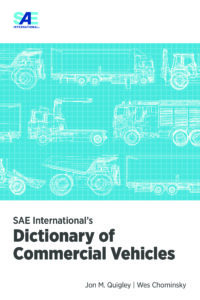
 Commercial Vehicle Dictionary for Engineers, Fleet Managers, and Transportation Professionals
Clear communication is essential in the commercial transportation industry. Engineers, fleet managers, manufacturers, and regulators rely on precise terminology to design vehicles, maintain fleets, meet regulations, and reduce risk.
Yet, commercial vehicle terminology is often inconsistent across organizations and regions. That inconsistency leads to misunderstandings, rework, delays, and compliance issues. We have written extensively about how we believe we are clearly communicating, but we are not. Interpretations of words are often based on experiences and mental models that are inconsistent between communicators.
A reliable commercial vehicle dictionary provides a shared language—helping professionals align faster and make better technical decisions.
Why Commercial Vehicle Terminology Creates Risk
 I have fortunately had the opportunity to work on many vehicle platforms. If you have seen me on some podcasts, you likely recognize the image to the left. I found this at KB Toys years ago: a toy featuring a collection of vehicle platforms on which I have worked. It made me think, they made this just for me! C5 Corvette, Prowler, Viper, and W900, all in one package!
Commercial vehicle programs span multiple disciplines, just like cars, including mechanical engineering, electrical systems, software development, manufacturing, quality, and regulatory compliance. Each discipline has its own specialized language, often defined differently. Commercial vehicles cover a wider range of applications (uses) and variations in feature content and build.
The language goes further when we apply the same platform to oil fields or to construction equipment, such as a cement-pumping vehicle.
Common challenges include:
-
Conflicting definitions across OEMs and suppliers
-
Regional differences in commercial vehicle terminology
-
Confusion between legacy vehicle systems and emerging technologies
-
Misinterpretation of safety and regulatory terms
Without a common reference, teams spend time clarifying meaning rather than solving problems. A commercial vehicle dictionary reduces that friction.
 What a Modern Commercial Vehicle Dictionary Includes
Today’s commercial vehicles integrate mechanical, electrical, and digital systems. A modern commercial vehicle dictionary reflects this complexity by covering:
Commercial Vehicle Classifications and Architectures
Clear definitions across light, medium, and heavy-duty vehicles, including Class 7 and Class 8 trucks, attachments, construction equipment, agriculture equipment, and more.
Advanced Commercial Vehicle Technologies
Terminology related to electrification, automation, connectivity, remote diagnostics, and telematics applications.
Safety, Testing, and Verification Terminology
Definitions supporting functional safety, validation, verification, and compliance testing.
Commercial Vehicle Regulations and Industry Standards
Precise language aligned with regulatory frameworks and industry standards to support compliance efforts.
This breadth makes a commercial vehicle dictionary useful across the full vehicle lifecycle—from concept through operation.
 Who Uses a Commercial Vehicle Dictionary
A comprehensive reference supports professionals throughout the transportation ecosystem, including:
- People new to commercial vehicles
-
Commercial vehicle engineers
-
Fleet managers and maintenance professionals
-
Manufacturing, quality, and reliability teams
-
Regulatory and compliance specialists
-
Educators, trainers, and students
For growing teams, it also accelerates onboarding by establishing a shared technical vocabulary.
More Than Definitions—A Practical Industry Tool
An effective commercial vehicle dictionary is not just a glossary. It is a working reference that helps organizations:
-
Improve cross-functional communication
-
Reduce errors caused by terminology gaps
-
Align suppliers and internal teams
-
Support technical documentation and reviews
-
Stay current as technologies and standards evolve
Used regularly, it becomes part of how teams work—not just something they look up.
Why Clear Language Matters in Commercial Vehicles
As commercial vehicles become more automated, connected, and regulated, precision in language becomes a competitive advantage. Organizations that invest in shared understanding reduce risk and move faster.
If you have ever asked for clarification during a design review, supplier discussion, or regulatory audit, the value of a trusted commercial vehicle dictionary is already clear.
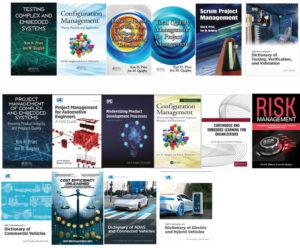

For more information, contact us:
The Value Transformation LLC store.
Follow us on social media at:
Amazon Author Central https://www.amazon.com/-/e/B002A56N5E
Follow us on LinkedIn: https://www.linkedin.com/in/jonmquigley/
https://www.linkedin.com/company/value-transformation-llc
Follow us on Google Scholar: https://scholar.google.com/citations?user=dAApL1kAAAAJ
