


Agile vs Traditional Project Management: Which Fits?
The debate over Agile vs. traditional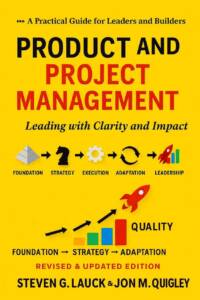 project management is often framed as though one approach must defeat the other. My perspective is different: the responsible project leader selects the right tool for the right job. Agile and conventional project management both offer real benefits, and both can fail when applied without regard for the product, risk, operating environment, and cost of change.
This is especially important in product development. A software feature, a stamped component, an embedded controller, a medical device, and an automotive or aircraft system do not present the same uncertainty or allow the same freedom to change. The project management approach must reflect those differences.
In Product and Project Management: Leading with Clarity and Impact, Steven G. Lauck and I treat methodology selection as a practical leadership decision. The book compares Agile, Waterfall, Stage Gate, and hybrid project management because no single solution fits every project.
Teams must explore alternatives, test assumptions, and convert knowledge into a product that can be manufactured, verified, launched, supported, and improved. Project management should enable that learning while protecting the organization from avoidable risk.
Sometimes short iterations and rapid customer feedback provide the best control. Sometimes deliberate planning, baselines, design reviews, and formal change management are essential. Frequently, the strongest answer is a hybrid approach: Agile learning cycles operating within a disciplined product development and governance structure.
Agile vs Traditional Project Management Is the Wrong Argument
 The first mistake is treating project management methodologies as competing belief systems. Our book contrasts pragmatic and dogmatic thinking for this reason.
A pragmatic leader evaluates evidence, context, feasibility, risks, and desired outcomes. A dogmatic leader begins with a preferred methodology and tries to make every project conform to it. Effective product and project management require the pragmatic approach.
Agile project management is iterative and incremental. It creates short feedback cycles, exposes work frequently, and allows priorities to change as the team learns. Scrum, for example, is based on transparency, inspection, and adaptation. It helps teams generate value in complex environments where important knowledge emerges through the work.
Traditional—or predictive—project management invests more effort in defining the objective, scope, architecture, sequence, resources, cost, schedule, risks, and acceptance conditions before making major execution commitments. Waterfall and other conventional methods use plans, baselines, reviews, and change control to coordinate work and protect an integrated outcome.
Neither definition says Agile teams do not plan or that traditional teams cannot adapt. Agile teams plan continuously. Competent traditional project managers revise forecasts and strategies when assumptions change.
The meaningful difference is where each methodology places its emphasis, when commitments are made, and how new knowledge changes the plan.
The useful question is not, “Which methodology is best?” It is:
Which combination of practices gives this team the fastest responsible path from uncertainty to verified value?
That question makes context more important than methodology labels. I have never once been on, or led, a traditional project in the way these things are often described, all of this before undertaking the next “category” of work effort. I hear this happens, but I have never seen one conducted like this.
Benefits of Agile Project Management
Agile project management creates value when the problem is complex, requirements are expected to evolve, and working increments can generate timely feedback.
The principal benefits include:
- Rapid learning: Short cycles reduce the time between an assumption, its implementation, and evidence from users or tests.
- Adaptability: The team can reorder work as customer needs, technology, risks, and market conditions change.
- Earlier visibility: Frequent reviews make progress and problems visible before the end of a lengthy development phase.
- Incremental value: Usable capabilities can sometimes be delivered before the entire product vision is complete.
- Customer collaboration: Regular interaction can prevent the team from efficiently building the wrong solution.
- Team ownership: Cross-functional, self-managing teams can make appropriate local decisions without waiting for a distant command chain.
- Risk containment: Small increments limit the time and effort exposed to a mistaken assumption.
These strengths make Agile project management a natural fit for software, digital services, research experiments, user-interface development, analytics, and other work in which increments can be created and evaluated economically.
Agile practices can also improve physical-product development. Time-boxed experiments, prototype demonstrations, daily coordination, visible backlogs, and retrospectives can accelerate learning in mechanical, electrical, manufacturing, and testing work.
The important limitation is that not every physical-product activity can be packaged, changed, and released like software.
Benefits of Traditional and Waterfall Project Management
Traditional project management creates value when coordination, sequencing, evidence, and the consequences of change require a more stable structure.
Its benefits include:
- Integrated planning: Complex dependencies across engineering, manufacturing, suppliers, facilities, quality, and service can be modeled before execution.
- Upfront architecture: System boundaries and interfaces receive attention before individual teams optimize isolated components.
- Capital control: Major expenditures can be tied to evidence of technical and manufacturing maturity.
- Long-lead coordination: Tooling, equipment, components, facilities, and external approvals can be scheduled against program milestones.
- Baselines and change control: The organization knows which product configuration is being designed, built, tested, approved, and released.
- Formal verification and validation: Requirements can be connected to verification methods, acceptance criteria, results, discrepancies, and approvals.
- Contract and governance alignment: Scope, deliverables, funding, reporting, and decision authority can be defined for customers and executives.
These strengths matter when failure could harm people, invalidate certification evidence, scrap expensive tooling, disrupt a launch, or create a significant service liability.
The weakness appears when a predictive plan is treated as proof that uncertainty has disappeared. A detailed schedule can create false confidence when the technology is immature, the customer problem is unclear, or the assumptions have not been tested.
Traditional project management discipline is valuable. Pretending a forecast is established knowledge is not.
Project Documentation and Requirements Traceability
Documentation is often discussed as though it were an administrative tax. Poor documentation can certainly become waste through duplicated reports, stale specifications, approval theater, and pages created without a clear user or decision.
 Useful documentation is different. It is part of the product-development control system.
Documentation allows a team to answer questions such as:
- Why does this requirement exist?
- Which design element satisfies it?
- What hazard, regulation, customer need, or interface does it address?
- How will compliance be verified?
- Which product configuration was tested?
- What changed, who approved it, and what else was affected?
- What evidence supports the product’s release?
- What must manufacturing, service, or a future project know?
Requirements traceability connects those answers. It creates an evidence thread from stakeholder needs through requirements, architecture, design, implementation, risk controls, verification, validation, release, and change history.
These are not simply paperwork preferences. Documentation and traceability protect the integrity of complex products and allow an organization to retain the knowledge created during development.
Agile Project Management Still Requires Documentation
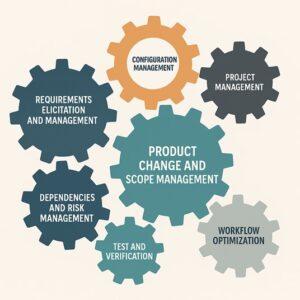 The Agile Manifesto values working software more than comprehensive documentation. It does not say documentation has no value. The manifesto explicitly recognizes value on both sides of the comparison.
The dangerous interpretation is that a user story, a conversation, and functioning code are always sufficient. That may be acceptable for a low-risk, easily reversible experiment. It is not sufficient when a team must:
- demonstrate regulatory compliance;
- reproduce a test;
- analyze a field failure;
- support multiple product variants;
- transfer work to manufacturing;
- maintain a product for years; or
- establish which configuration was approved and released.
Scrum itself depends on visible artifacts and a Definition of Done. For regulated or safety-related products, that definition may include updated requirements, design records, risk analyses, review evidence, traceability links, test results, configuration identification, and required approvals.
Agility changes how evidence is produced. It does not eliminate the need for evidence.
Build Documentation and Traceability Into the Work
The best answer is not a large documentation phase after development. Evidence should be created with the product increment.
For each relevant backlog item or work package, the team can require:
- the originating requirement or need to be identified;
- acceptance and verification criteria to be defined;
- affected risks and interfaces to be reviewed;
- design decisions and assumptions to be recorded;
- tests and results to be linked;
- the applicable product configuration to be identified; and
- approved changes to be reflected in controlled product information.
This approach turns documentation into a living representation of the product rather than an archaeological reconstruction conducted before an audit or product launch.
 What Limits Each Project Management Approach?
Methodology selection should begin with the conditions of the work. Several factors can make a purely Agile or purely traditional project management model a poor fit.
Regulatory Compliance and Safety-Critical Products
Regulation does not automatically prohibit Agile development. It does, however, change what must be planned, controlled, reviewed, documented, and demonstrated.
Regulated product development may require lifecycle plans, traceable requirements, risk management records, independent reviews, configuration management, verification and validation evidence, controlled approvals, and record retention.
An Agile iteration can operate within these environments, but “done” must include the required evidence. A team cannot defer traceability, configuration control, risk records, and verification artifacts indefinitely and claim that frequent delivery alone has reduced risk.
The greater the safety consequence and regulatory burden, the more deliberately the project must manage independence, approvals, baselines, evidence retention, tool qualification where applicable, and change impact.
 Costly Tooling and the Cost of Change
Software can often be rebuilt and redeployed at a relatively low marginal cost. Physical-product changes may require new dies, molds, fixtures, gauges, printed circuit boards, test equipment, plant layouts, certification tests, packaging, supplier orders, or inventory disposition.
The cost of change is not uniform across the product lifecycle. Design changes typically become more expensive as development progresses and commitments become more difficult to reverse.
This does not justify locking the design too early. It supports a smarter sequence:
- Iterate economically through models, simulations, trade studies, mockups, and prototypes.
- Resolve high-impact uncertainties and interfaces.
- Demonstrate appropriate technology and manufacturing maturity.
- Establish a controlled product baseline.
- Authorize expensive or difficult-to-reverse commitments.
Agile learning should occur before and around the tooling decision. Predictive controls should protect the organization when that decision becomes economically difficult to reverse.
Systems Integration and Technical Dependencies
A team may be able to iterate one component while the product succeeds only as an integrated system.
Embedded software depends on hardware availability. Hardware depends on packag ing, thermal performance, power, interfaces, and suppliers. Manufacturing test equipment depends on stable interfaces and diagnostic requirements. Service procedures depend on the released architecture and configuration.
Local velocity can hide system-level delays. If multiple teams optimize their backlogs without shared architecture, interface control, integration events, and configuration baselines, the organization may discover incompatibilities late.
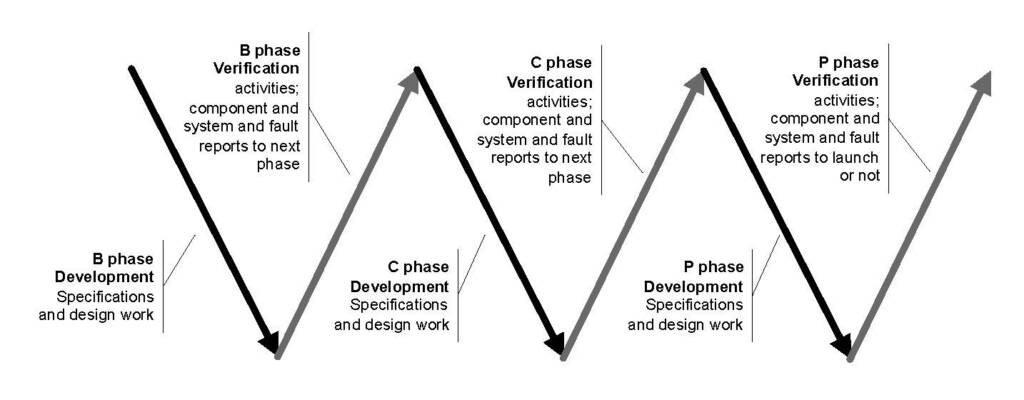
Large cyber-physical products therefore benefit from a dual rhythm: short learning cycles within subsystems combined with deliberate system-level integration, verification, and readiness milestones.
Supplier Management and Long Lead Times
External suppliers do not always operate on the same cadence as an Agile development team. Custom components, semiconductor allocations, production equipment, test facilities, and certification resources may require commitments months in advance.
A backlog cannot shorten a physical lead time by itself. The project needs forecasts, make-or-buy decisions, supplier maturity reviews, interface dates, capacity assumptions, logistics planning, and contingency options.
Agile teams can still adapt specifications and priorities, but supplier contracts and material commitments define boundaries around that flexibility.
Contracts, Funding, and Project Governance
Some work is funded incrementally around outcomes. Other work is governed by fixed appropriations, capital-approval cycles, fixed-price contracts, statement-of-work deliverables, earned-value expectations, or customer milestones.
 A project management method that ignores those conditions creates organizational friction.
Agile contracting and incremental funding can improve flexibility, but the commercial model, decision rights, and acceptance process must support them. When they do not, the project may require predictive commitments at the contractual level and adaptive execution within controlled work packages.
Configuration Management, Cybersecurity, and Product Support
 Products continue to change after launch. They receive software updates, supplier substitutions, cost reductions, security patches, field repairs, and regulatory updates. Multiple product variants may be in production and service simultaneously.
Fast change without configuration management can make it unclear which requirement, software version, calibration, component, test result, or service instruction applies to a particular product.
Cybersecurity can add vulnerability monitoring, software bills of materials, controlled updates, and incident-response evidence. Product support can extend these obligations for years.
The need for speed remains, but speed without product identity and traceability creates a different form of risk.
Project Management Methodology Decision Matrix
The following decision matrix is a starting point rather than an automatic answer. A project can require different methods at different levels or lifecycle stages.
| Project condition | Agile emphasis | Traditional emphasis | Hybrid response |
|---|---|---|---|
| Requirements or customer needs are highly uncertain | Strong fit | Risk of false precision | Use discovery iterations before progressive baselining |
| Working increments can be tested economically and frequently | Strong fit | May delay feedback | Use short demonstrations within an integrated roadmap |
| Failure has major safety or regulatory consequences | Possible when rigorous evidence is built in | Strong fit for control and assurance | Iterate while maintaining formal risk, traceability, verification, and approvals |
| Tooling or capital investment is expensive | Useful before commitment | Strong fit near authorization and launch | Explore iteratively, then gate irreversible spending using maturity evidence |
| Hardware, software, manufacturing, and service are tightly coupled | Local Agile work may miss system effects | Strong fit for architecture and integration | Use Agile subsystem work with system-level baselines and integration events |
| Supplier and facility lead times are long | Backlogs cannot remove physical lead times | Strong fit for procurement coordination | Predict long-lead commitments while adapting work within those boundaries |
| Technology is immature | Strong fit for experiments | Detailed forecasts may be unreliable | Time-box learning and require maturity evidence before commitment |
| Scope and acceptance conditions are stable | Agile remains possible | Strong fit | Select the lightest approach that provides sufficient control |
| Customer feedback is frequent and representative | Strong fit | Risk of late validation | Use feedback to refine a controlled product roadmap |
| Documentation and traceability obligations are extensive | Effective only when evidence is part of Done | Strong fit but can become bureaucratic | Produce controlled, traceable evidence incrementally |
| Product variants and long-term support are important | Requires disciplined configuration practices | Strong fit | Combine rapid change with lifecycle configuration control |
| Fixed contracts or governance gates dominate | May conflict with the funding and acceptance model | Strong fit | Use predictive commitments externally and iterative execution internally |
A simpler decision rule uses two variables: uncertainty and the cost of change.
| Conditions | Low cost of change | High cost of change |
|---|---|---|
| High uncertainty | Favor Agile experimentation and rapid feedback | Favor a hybrid: learn early and economically, then control major commitments |
| Low uncertainty | Use the simplest sufficient approach | Favor predictive planning, baselines, and disciplined execution |
Two additional questions refine the choice:
- What are the consequences of being wrong?
- How reversible is the decision?
High consequences and low reversibility increase the need for evidence, independent review, configuration control, and explicit authorization—regardless of the chosen methodology.
Benefits of Hybrid Project Management
Hybrid project management is sometimes described as “a little Agile and a little Waterfall.” That description is too casual. An effective hybrid model assigns practices according to the nature of the work and the decisions being made.
I have used combinations of Scrum and traditional project management for dynamic work that required frequent adaptation, while not abandoning planning and control.
The value did not come from blending terminology. It came from using short coordination and learning cycles, in which the team faced uncertainty while retaining the structures needed to manage dependencies, evidence, commitments, and risk.
The important step is to design the combination intentionally.
Plan Different Time Horizons Differently
Plan the product vision, architecture, major interfaces, capital needs, supplier strategy, regulatory path, verification strategy, and launch at the level needed to expose dependencies and risk.
Plan near-term development in greater detail through short cycles. Keep later work at an appropriate level until learning justifies greater precision.
This avoids two damaging extremes: having no credible integrated plan or building a detailed plan on untested assumptions.
Make Documentation Part of Every Iteration
Treat requirements, risk analysis, architecture decisions, test procedures, results, traceability, and configuration updates as part of the increment when applicable. Review both the product and its evidence.
This reduces the documentation backlog and makes compliance work observable. A review should reveal not only that a feature appears to work but also:
- which requirement it satisfies;
- which risks were addressed;
- what configuration was tested; and
- what evidence remains incomplete.
Gate Irreversible Decisions
Do not use project gates merely to ask whether the team completed a list of documents. Use them to decide whether the available evidence supports the next commitment.
A tooling-release gate should examine design maturity, open risks, interface stability, manufacturability, supplier capability, verification results, expected changes, and the economic exposure if assumptions prove incorrect.
A gate creates value when it protects a consequential decision. It becomes waste when it only confirms that a meeting occurred.
Align Product Management and Project Management
Product management defines the customer, the problem, the value proposition, the priorities, the roadmap, and the desired outcomes.
Project management organizes the people, work, decisions, dependencies, resources, risks, evidence, and commitments required to produce those outcomes.
The two disciplines must learn together. Product discovery that ignores delivery constraints creates an attractive but impractical roadmap. Project execution that ignores customer learning delivers efficiently against an obsolete assumption.
A hybrid cadence can connect the disciplines through:
- product and market reviews;
- sprint or iteration reviews;
- architecture and interface reviews;
- risk and decision reviews;
- supplier and manufacturing-readiness reviews;
- integration and verification events; and
- launch and operational-readiness decisions.
Each review should have a clear purpose, audience, evidence set, and decision. More meetings are not the objective. Faster and better-informed decisions are.
Choosing the Right Project Management Methodology
My view of Agile vs traditional project management is not neutrality for its own sake. It is a demand for professional judgment.
Use Agile practices when they shorten the learning cycle, expose working results, engage customers, and allow the team to adapt before uncertainty becomes expensive.
Use traditional project management when the project must coordinate long-lead work, manage system interfaces, protect a baseline, authorize capital, provide regulatory evidence, or control a decision that is costly to reverse.
Use hybrid project management when the product contains both kinds of work—which is true for many modern products combining hardware, software, connectivity, manufacturing, suppliers, and long service lives.
Do not select a methodology because it is fashionable, familiar, or required by an organizational slogan. Select and tailor the approach by asking:
- What do we know, and what must we learn?
- How quickly can we obtain representative feedback?
- What are the consequences of being wrong?
- Which decisions are reversible?
- When does the cost of change rise sharply?
- What evidence and traceability must exist?
- Which interfaces, suppliers, facilities, and approvals constrain the work?
- How will we know the product—and the organization—are ready?
Those answers define the management system the project needs.
Product and Project Management—The Right Tool for the Job
The central message of Product and Project Management: Leading with Clarity and Impact is not that every organization should replace its current process with a single prescribed methodology.
Steven G. Lauck and I connect foundation, strategy, execution, adaptation, leadership, and quality because successful delivery depends on the entire management system. Improvement means strengthening the organization’s ability to learn, decide, execute, verify, and transfer knowledge across the product lifecycle.
Seen this way, Agile vs. traditional is not a contest with a single permanent winner. It is a context-dependent management choice that should be revisited as uncertainty declines, commitments grow, and the product moves toward production and support.
Agile methods contribute rapid feedback, transparency, experimentation, and adaptation. Traditional project management contributes integration, foresight, traceability, governance, and control of consequential commitments. Neither set of benefits should be discarded.
A mature organization does not ask its teams to be Agile everywhere or predictive everywhere. It creates enough discipline to manage consequences and enough flexibility to learn.
That is the right tool for the right job—and it is how product and project management turn ideas into sustainable value.

For more information, contact us:
The Value Transformation LLC store.
Follow us on social media at:
Amazon Author Central https://www.amazon.com/-/e/B002A56N5E
Follow us on LinkedIn: https://www.linkedin.com/in/jonmquigley/
https://www.linkedin.com/company/value-transformation-llc
Follow us on Google Scholar: https://scholar.google.com/citations?user=dAApL1kAAAAJ
