


 How to Build a Product Development Roadmap Teams Can Execute
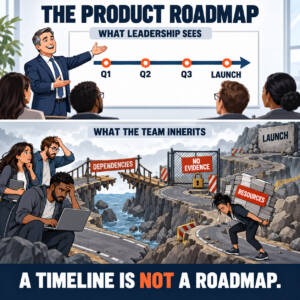
A product development roadmap should help people make decisions. Too often, it becomes a presentation filled with attractive timelines, colored bars, and optimistic milestones—but little connection to the work required to deliver the product.
A useful product development roadmap must connect desired outcomes with capabilities, requirements, dependencies, resources, evidence, and decision gates. It must help product leaders decide what should happen, project teams determine how it can happen, and executives understand what must be true before the organization commits more time and money.
The roadmap is not the plan itself. It is the framework that connects strategy to executable work.
The Problem With Presentation-Driven Roadmaps
Many roadmaps are created to communicate confidence. They show product releases, feature groups, target dates, and major milestones. What they often fail to show is the uncertainty behind those commitments.
A date on a slide does not demonstrate that:
- Customer needs have been validated.
- Required technologies are mature.
- Critical suppliers can meet timing and quality expectations.
- Manufacturing processes are capable.
- Engineering resources are available.
- Regulatory requirements have been identified.
- Product performance has been verified.
- The business case remains valid.
When these conditions are missing, the roadmap becomes a schedule of assumptions.
The farther the roadmap extends into the future, the greater the uncertainty. Treating distant commitments with the same confidence as near-term work creates false precision. It encourages teams to defend dates instead of investigating what they must learn.
An executable roadmap makes uncertainty visible.
Start With Outcomes, Not Features
A product roadmap should begin with the outcome the organization intends to produce. Features and technical solutions come later.
An outcome might include:
- Reducing customer installation time.
- Improving system reliability.
- Entering a new market.
- Lowering product cost.
- Meeting a regulatory requirement.
- Increasing manufacturing capacity.
- Creating a reusable technology platform.
This distinction matters. A feature is something the organization intends to build. An outcome explains why the work deserves investment.
If a feature does not contribute to a defined customer, business, operational, or technical outcome, its position on the roadmap should be questioned.
Starting with outcomes also gives the team room to learn. The original solution may prove impractical, too expensive, or ineffective. When the roadmap is organized around outcomes, the team can change the solution without losing sight of the objective.
Connect Outcomes to Required Capabilities
An outcome rarely comes from a single feature or department. It usually depends on several capabilities working together.
For example, launching a connected product may require:
- Embedded software and electronics.
- Cloud infrastructure.
- Cybersecurity controls.
- Diagnostic capability.
- Manufacturing test equipment.
- Service procedures.
- Supplier readiness.
- Customer support processes.
- Regulatory and compliance evidence.
This is where systems thinking becomes essential. The customer experiences the complete product, not the organizational structure that produced it.
A roadmap that lists only customer-facing features may ignore the enabling work required from engineering, quality, procurement, manufacturing, service, and information technology. These omissions eventually reappear as delays, emergency spending, quality problems, or incomplete releases.
The roadmap should therefore connect every major outcome with the capabilities needed to produce and sustain it.
Build the Roadmap Around Six Connected Elements
A strong product development roadmap connects six elements:
| Roadmap element | Question it must answer |
|---|---|
| Outcomes | What measurable result are we trying to produce? |
| Capabilities | What must the product and organization be able to do? |
| Dependencies | What technical, supplier, regulatory, or organizational conditions affect the work? |
| Evidence | What must we learn, demonstrate, or verify? |
| Resources | What people, equipment, funding, and capacity are required? |
| Decision gates | What evidence is required before we continue, change direction, or stop? |
These elements prevent the roadmap from becoming a list of promised features.
They also connect product management and project management. Product management maintains the connection to customers, markets, value, and strategic priorities. Project and program management connect that direction to sequencing, dependencies, resources, risk, and delivery.
Neither discipline can create an executable roadmap alone.
Make Dependencies Visible
Dependencies are among the most common sources of roadmap failure.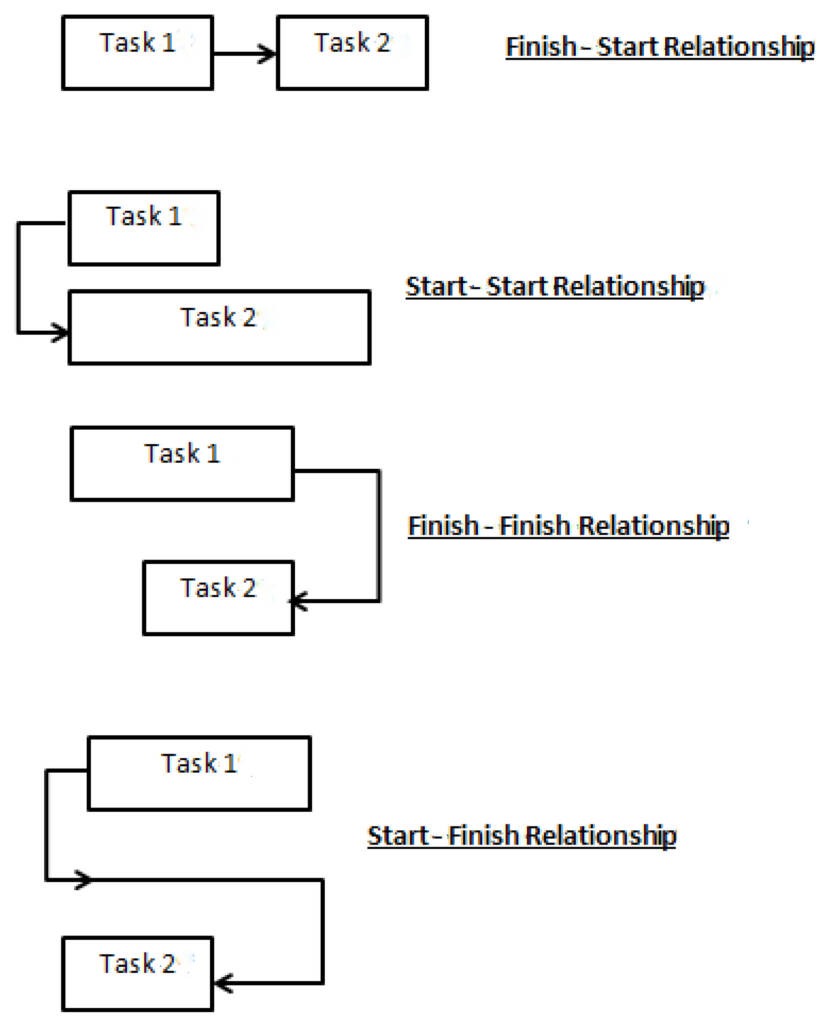
A team may schedule software integration without confirming hardware availability. Manufacturing equipment may be ordered before the design is sufficiently stable. Verification may be scheduled without identifying test resources, instrumentation, or representative samples. A supplier may be expected to deliver production-intent components before specifications are released.
Each activity may look reasonable when viewed separately. The failure becomes visible only when the complete system is examined.
Dependencies can include:
- Hardware and software interfaces.
- Requirements and architecture decisions.
- Prototype and tooling availability.
- Supplier selection and qualification.
- Regulatory approvals.
- Laboratory and test capacity.
- Manufacturing process development.
- Data availability.
- Staffing and specialized expertise.
- Decisions from other products or programs.
These relationships should be visible on the roadmap. If an outcome depends on a critical event, that dependency should not be hidden in a detailed project schedule that senior decision-makers never see.
Put Evidence on the Roadmap
Development progress is not the same as accumulated effort.
A team can spend months designing, meeting, documenting, and building without reducing the most important uncertainties. That is activity, but it may not represent meaningful progress.
Evidence demonstrates that an assumption is valid or that a risk has been reduced. It might include:
- Customer interviews or observational research.
- Prototype evaluations.
- Simulation results.
- Interface demonstrations.
- Supplier capability studies.
- Design verification results.
- Process capability data.
- Reliability testing.
- Regulatory reviews.
- Pilot production results.
- Field trials.
Evidence should be planned deliberately. What do we need to know? How will we learn it? When must we know it? What decision will the result support?
This turns the roadmap into a learning system. The objective is not simply to complete activities. It is to reduce uncertainty before making increasingly expensive commitments.
Use Decision Gates, Not Ceremonial Reviews
Many organizations have phase-gate processes, but not every gate represents a real decision. Some are status meetings in which continuation is already assumed.
A meaningful decision gate should have defined entry criteria, required evidence, and po ssible outcomes. Those outcomes may include:
- Continue as planned.
- Continue with conditions.
- Perform additional investigation.
- Change the technical approach.
- Adjust scope or timing.
- Reallocate resources.
- Pause the program.
- Stop the work.
If every gate produces the same decision, it is not functioning as a gate.
The amount and quality of evidence should increase as the organization moves from concept through development, validation, industrialization, launch, and production. Early decisions may rely on estimates and prototypes. Later decisions require verified designs, capable processes, controlled configurations, and production-representative evidence.
Account for Resource Constraints Honestly
A roadmap built without resource constraints is a wish list.
Resources include more than headcount. Product development may depend on:
- Specialized engineering knowledge.
- Prototype materials.
- Test laboratories.
- Simulation tools.
- Manufacturing equipment.
- Supplier capacity.
- Certification resources.
- Capital funding.
- Program leadership.
- Customer or operator access.
Organizations frequently plan more simultaneous work than their constrained resources can support. Every initiative appears achievable because each is evaluated independently. The conflict becomes visible only when several programs require the same specialists, test equipment, suppliers, or production resources at the same time.
An executable roadmap must show these constraints early enough for leaders to make choices. Prioritization means deciding what will receive resources—and what will not.
Match Detail to the Planning Horizon
A roadmap should become less detailed as it extends into the future.
Near-term work may include committed deliverables, assigned resources, defined tests, and scheduled decisions. Mid-term work may identify capability increments, major dependencies, and planned evidence. Long-term work should focus on strategic outcomes, options, and uncertainties.
This produces three useful planning horizons:
Now
Work is sufficiently understood to support detailed planning and execution. Requirements, responsibilities, near-term resources, and verification activities should be clear.
Next
The organization understands the intended capabilities and major dependencies, but some decisions remain open. The focus should be on resolving uncertainty and preparing for commitment.
Later
The organization has identified possible outcomes and strategic directions but should avoid false precision. Scenarios and options are more useful than detailed schedules.
This structure lets leadership communicate direction without pretending every future decision has already been made.
Connect the Roadmap to Execution
The roadmap must connect to the systems teams use to manage actual work. It should trace into requirements, project plans, risk registers, product backlogs, supplier plans, verification activities, configuration baselines, and manufacturing-readiness work.
That does not mean placing every task on the roadmap. Too much detail makes the roadmap unreadable and hard to maintain.
Instead, establish traceability:
- Outcomes connect to measurable success criteria.
- Capabilities connect to requirements and architecture.
- Roadmap increments connect to projects or work packages.
- Dependencies connect to owners and planned resolution dates.
- Risks connect to mitigation or learning activities.
- Decision gates connect to required evidence.
- Releases connect to controlled product configurations.
This traceability allows leaders to move from a roadmap commitment to the evidence and work supporting it.
Review the Roadmap as Conditions Change
A roadmap is not complete when the presentation is approved. It must be reviewed as evidence accumulates and conditions change.
Useful roadmap reviews should examine:
- What has been learned?
- Which assumptions have been confirmed or rejected?
- Have customer or business priorities changed?
- Have new dependencies emerged?
- Are critical resources still available?
- Has technical or manufacturing risk changed?
- Does the next investment remain justified?
- Which decisions are now required?
The purpose is not to protect the original roadmap. The purpose is to make better decisions with the information now available.
Changing a roadmap because the team learned something important is not necessarily poor planning. Refusing to change it despite contrary evidence is.
A Roadmap Should Make Difficult Conversations Possible
A good product development roadmap exposes tradeoffs.
It shows when two initiatives compete for the same resources. It reveals when a launch date depends on unresolved technical risk. It identifies when supplier timing conflicts with verification needs. It distinguishes a strategic objective from an unsupported promise.
That visibility can create constructive conflict, but this is valuable. Teams need a shared representation of the work that lets them examine assumptions, priorities, risks, and alternatives.
The roadmap should not eliminate disagreement. It should focus disagreement on the decisions that matter.
From Roadmap to Decision System
A product development roadmap becomes executable when it does more than display intended releases. It must connect:
- Strategy to measurable outcomes.
- Outcomes to required capabilities.
- Capabilities to development work.
- Work to dependencies and resources.
- Progress to objective evidence.
- Evidence to investment decisions.
That connection turns the roadmap into a management system spanning the product lifecycle.
The real test is not whether the roadmap looks convincing in a presentation. The test is whether engineering, product, project management, quality, procurement, manufacturing, and leadership can use it to make consistent decisions.
A roadmap teams can execute does not claim to predict the future perfectly. It makes the organization’s assumptions visible, directs learning toward the most important uncertainties, and ensures that commitments are supported by evidence.
That is how a roadmap moves from presentation to execution.

For more information, contact us:
The Value Transformation LLC store.
Follow us on social media at:
Amazon Author Central https://www.amazon.com/-/e/B002A56N5E
Follow us on LinkedIn: https://www.linkedin.com/in/jonmquigley/
https://www.linkedin.com/company/value-transformation-llc
Follow us on Google Scholar: https://scholar.google.com/citations?user=dAApL1kAAAAJ
