


Introduction – Delays Are a Symptom, Not the Problem
 “Engineering needs three more weeks.”
This post was prompted by a LinkedIn post Prevent Delays with CM2. This statement has become normalized across industries, yet it signals something deeper than scheduling inefficiency. Configuration Management Delays are not caused by lack of effort, poor planning, or even supply chain disruption. They are symptoms of a system that lacks integrity in how product data is created, controlled, and communicated.
Organizations often react by adding resources or compressing timelines. But these responses treat the symptom—not the cause. I have long written and spoken about configuration management and its close connection to effective, efficient product development, as seen in my work with Tom Cagley on the Software Process and Measurement Cast.
The Real Issue – Broken Data, Documentation, and Traceability
At the core of Configuration Management Delays is a breakdown in three critical areas. In one project, I witnessed two configuration management failures that cost the company 6+ months and many millions of dollars in overruns. In fact, over many years of my career, I have seen many manifestations of this type of failure. Everything from creating the product to setting up a verification and manufacturing line setup.
Documentation Controls
Without disciplined documentation controls:
-
 Teams operate from outdated or conflicting information
 -
Changes are not consistently recorded or validated
-
Product definitions drift from reality
Documentation is not bureaucracy—it is the mechanism that ensures what is built matches what was intended.
Traceability
Traceability provides the ability to:
-
Track requirements through design, manufacturing, and support
-
Understand the impact of changes before they are implemented
-
Validate that all elements align with the current configuration
When traceability is weak or absent, decisions are made in isolation, leading to increased rework and delays.
 Cross-Functional Communication
Disconnected systems create communication gaps between:
-
Engineering
-
Manufacturing
-
Operations
-
Supply chain
-
Quality
These gaps result in:
-
Misaligned assumptions
- Unsynchronized work products
-
Late discovery of issues
-
Escalating correction costs
Configuration Management Delays often emerge where communication depends on individuals rather than systems.
What is CM2 and Why It Matters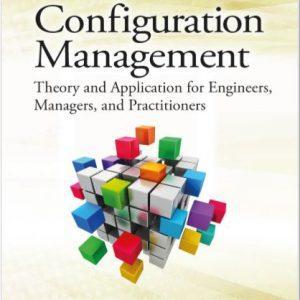
CM2 (Configuration Management 2) is a structured, best-practice methodology for managing product data, documentation, and change across the entire lifecycle.
It ensures:
-
All stakeholders work from a single, validated source of truth
-
Changes are controlled, evaluated, and traceable
-
Product configurations are consistent and aligned with requirements
CM2 is not simply documentation management—it is a business system that enables predictable outcomes.
Organizations that implement CM2 effectively reduce Configuration Management Delays by:
-
Eliminating ambiguity
-
Improving decision-making speed
-
Aligning data across all functions
Variation, Stimuli, and the Limits of Product Knowledge
 One of the most overlooked contributors to Configuration Management Delays is the inability to fully understand the range of conditions—stimuli—a product will encounter.
Variation in Real-World Conditions
Products are subjected to variations in:
-
Environmental conditions (temperature, humidity, vibration)
-
Usage patterns
-
Manufacturing inconsistencies
-
Supply chain variability
These variations introduce uncertainty into the system.
Limits of Acquiring Actual Stimuli
It is impossible to fully replicate or observe all real-world conditions during development. This creates:
-
Gaps between expected and actual performance
-
Late-stage design changes
-
Increased risk of failure after release
The Role of Configuration Management
CM2 addresses this by:
-
Maintaining traceability between requirements and validation methods
-
Ensuring all assumptions are documented and controlled
-
Providing visibility into how variation impacts the configuration
Without this structure, organizations experience Configuration Management Delays as they react to unknowns rather than manage them proactively.
From Data Confusion to Decision Confidence
The ultimate goal is not better documentation—it is better decisions.
When documentation controls and traceability are effective:
-
Teams spend less time searching for information
-
Decisions are based on validated data
-
Changes are implemented with known impacts
This transforms:
-
Uncertainty → clarity
-
Reaction → control
-
Delay → predictability
Reducing Configuration Management Delays is fundamentally about improving decision confidence across the enterprise.
Conclusion – Fix the System, Not the Schedule
Product delays are not random events. They are the result of systemic weaknesses in how organizations manage configuration, data, and communication.
CM2 provides a framework to:
-
Control documentation
-
Ensure traceability
-
Align cross-functional teams
-
Manage variation and uncertainty
Until these elements are addressed, Configuration Management Delays will persist—regardless of how much effort teams apply.
The solution is not working faster.
The solution is knowing what is true.

For more information, contact us:
The Value Transformation LLC store.
Follow us on social media at:
Amazon Author Central https://www.amazon.com/-/e/B002A56N5E
Follow us on LinkedIn: https://www.linkedin.com/in/jonmquigley/
https://www.linkedin.com/company/value-transformation-llc
Follow us on Google Scholar: https://scholar.google.com/citations?user=dAApL1kAAAAJ
