

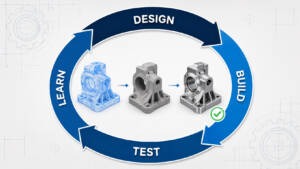
 The Product Realization Engine: Design, Build, Test, Learn
Products do not move from idea to production in a straight line. Drawings are not completed once, prototypes are not built once, and testing does not merely confirm that the team was right. Effective product realization is an iterative process through which engineering teams design, build, test, and learn while progressively reducing uncertainty.
Each cycle should produce evidence. That evidence may confirm an assumption, expose an interface problem, reveal a manufacturing constraint, or demonstrate that the proposed solution will not meet the customer’s need. All of those outcomes have value when they occur early enough for the team to act.
The objective is not to eliminate iteration. Iteration is where much of the learning occurs. The objective is to make each iteration deliberate, controlled, and connected to the complete product system.
Why Linear Product Development Creates Rework
A traditional product-development diagram often appears as a sequence:
Requirements lead to design. Design leads to prototyping. Prototyping leads to testing. Testing leads to production.
The problem is not the presence of these activities. The problem is treating them as isolated handoffs.
When product development operates through handoffs, the design team may complete its work before manufacturing reviews it. Purchasing may engage suppliers after important material or process decisions have already been made. Testing may receive a product without understanding the assumptions behind its design. Quality may be asked to produce an FMEA or Control Plan after the critical decisions are complete.
The project may look orderly, but the learning arrives late.
That delayed learning becomes engineering changes, tooling modifications, supplier disruption, repeated validation, production delays, and field failures. What appeared to be progress was sometimes only the accumulation of untested assumptions.
A better product realization process brings these functions into the cycle before decisions become expensive to change.
The Four Actions of the Product Realization Engine
Design, build, test, and learn are not simply four project phases. They form a repeating evidence loop. Each pass through the loop should answer important questions and prepare the team for the next level of commitment.
Design: Convert Needs into Testable Decisions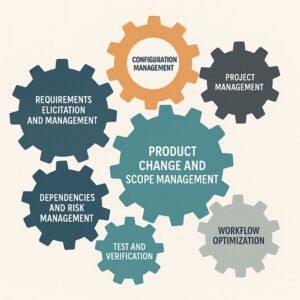
Design begins with more than geometry, software, or a bill of materials. It begins with understanding what the product must accomplish, under what conditions, and for whom.
The team must translate customer needs into requirements that can be analyzed and tested. It must define interfaces, operating environments, performance targets, failure responses, and manufacturing constraints. The design should also identify the assumptions upon which the proposed solution depends.
Some useful questions include:
- What problem are we solving?
- Which requirements are essential to customer value?
- Which interfaces present the greatest risk?
- What assumptions have not yet been verified?
- What failure modes could prevent the product from performing as intended?
- What must we learn before committing to tooling, suppliers or production equipment?
Requirements, system architecture, interface definitions, and the DFMEA help make these questions visible. They allow the team to determine where evidence is needed before the design moves forward.
A design is not complete because the drawing has been released. It is mature when evidence shows that the product can meet its intended purpose.
Build: Turn Assumptions into Something Observable
A prototype is a question made physical.
That prototype does not always need to represent the complete product. It may be a simulation, breadboard circuit, software model, 3D-printed component, test fixture, machined part, wire harness, or limited production assembly. The correct build depends on the question the team is trying to answer.
An early prototype might examine packaging, usability, or basic function. A later build might evaluate materials, tolerances, supplier capability, or the proposed manufacturing process. As the product matures, the prototype should increasingly represent the configuration and processes intended for production.
The build must have a defined purpose. Before starting, the team should know:
- Which questions the prototype is intended to answer
- Which product configuration is being evaluated
- What fidelity is required
- Which measurements will be collected
- What constitutes a useful result
- How the findings will affect the next decision
Building without a learning objective can create activity without progress. The prototype may be impressive, but if it does not address the project’s most important uncertainty, it consumes time and money without adequately reducing risk.
Test: Produce Evidence for Decisions
 Testing is not merely an activity performed at the end of development. It is how the organization determines what it actually knows.
A good test connects a requirement or assumption to an observable result. It identifies the configuration being tested, the method used, the equipment involved, the operating conditions, and the acceptance criteria. It should also provide enough transparency for others to understand and evaluate the result.
Different stages require different types of testing. Analysis, simulation, software-in-the-loop, hardware-in-the-loop, bench testing, environmental testing, vehicle testing, and production inspection can all contribute evidence. The method should match the question and the product’s maturity.
Testing must also distinguish verification from validation:
- Verification asks whether we built the product according to its requirements and specifications.
- Validation asks whether we built the right product for its intended use and customer.
Passing a verification test does not automatically mean the product will deliver value in the field. The specification itself may be incomplete, incorrect, or disconnected from actual use. This is why testing must remain connected to requirements, customer expectations, and system-level performance.
A test that produces data but does not inform a decision is incomplete. Testing should reduce uncertainty, expose risk, or demonstrate readiness.
Learn: Convert Results into Organizational Knowledge
The learning step is frequently neglected. Teams complete a test, write a report, and move to the next scheduled activity without fully examining what the evidence means.
Learning requires the team to compare expected and observed results. When they differ, the response should go beyond assigning blame or correcting the immediate symptom. The team should investigate the underlying assumption, requirement, interface, design decision, or process condition responsible for the difference.
The findings may require updates to:
- Product requirements
- System architecture
- Design details
- Interface definitions
- DFMEA or PFMEA
- Test methods and acceptance criteria
- Manufacturing processes
- Supplier requirements
- Control Plans and work instructions
- Risk registers
- Schedules and cost estimates
If the lesson remains only in a test report or in one engineer’s memory, the organization has not completed the learning cycle. The knowledge must be incorporated into the controlled product and project information used by the rest of the team.
Short Evidence Cycles Reduce the Cost of Change
The later a problem is discovered, the more systems it affects.
An incorrect assumption found during a digital analysis may require a few engineering hours to correct. The same assumption discovered after tooling release may affect drawings, purchased material, supplier schedules, manufacturing equipment, test plans, and launch commitments. If it reaches the customer, the consequences can include warranty expense, service campaigns, damaged trust, and lost business.
Short evidence cycles help teams find problems while their consequences remain manageable. They also make smaller decisions possible. Instead of committing the entire budget based on an unproven concept, the organization can increase its commitment as evidence accumulates.
| Evidence cycle | Primary question | Typical output |
|---|---|---|
| Concept | Can this idea address the need? | Feasibility evidence |
| Engineering prototype | Can the design perform? | Performance data and design learning |
| Integrated prototype | Do the components and interfaces work together? | System-level evidence |
| Production-intent build | Can we manufacture it consistently? | Process capability and quality evidence |
| Pilot production | Are the product and process ready to scale? | Launch-readiness evidence |
These cycles do not remove risk, but they make risk more visible and manageable.
Iteration Does Not Mean a Lack of Control
Some organizations resist iteration because it appears inconsistent with schedules, design controls or formal development processes. That concern is understandable, but it confuses controlled learning with uncontrolled change.
Iteration becomes chaotic when the team cannot identify which configuration was built, what changed, why it changed or which evidence supports the decision. The solution is not to eliminate iteration. The solution is to provide system-level control.
That control includes:
- Traceable and testable requirements
- Defined system architecture and interfaces
- Configuration identification
- Version control and release records
- Documented engineering changes
- Risk-based test planning
- Requirements-to-test traceability
- Clear decision authority
- Entry and exit criteria for major maturity gates
Agile development techniques, rapid prototyping, and formal systems engineering are not inherently in conflict. Short learning cycles can operate within an overall product architecture, configuration-management process, and business governance structure.
The loop can move quickly while the system remains controlled.
Product Realization Requires Cross-Functional Participation
Engineering cannot operate the product realization engine alone.
Manufacturing understands process limits, tooling constraints, and operator interaction. Quality contributes failure analysis, measurement strategy, and process-control thinking. Purchasing and suppliers provide information about material availability, lead times, special processes and capacity. Service teams understand field conditions and repairability. Project leaders connect these technical realities to timing, cost, resources, and business commitments.
The team should be involved when its knowledge can influence the decision—not after the decision creates a problem for that function to solve.
Constructive disagreement is valuable in this environment. Different functions will see different risks because they have different responsibilities and experience. A manufacturing engineer may challenge a tolerance. A test engineer may question whether a requirement is measurable. A supplier may identify a material or capacity constraint. A service technician may expose an access problem invisible in the CAD model.
These challenges are not obstacles to progress. Properly managed, they improve the product and prevent expensive surprises.
Measure Learning, Not Just Activity
Projects frequently measure completed drawings, prototypes built, test cases executed, and milestones reached. These measures provide use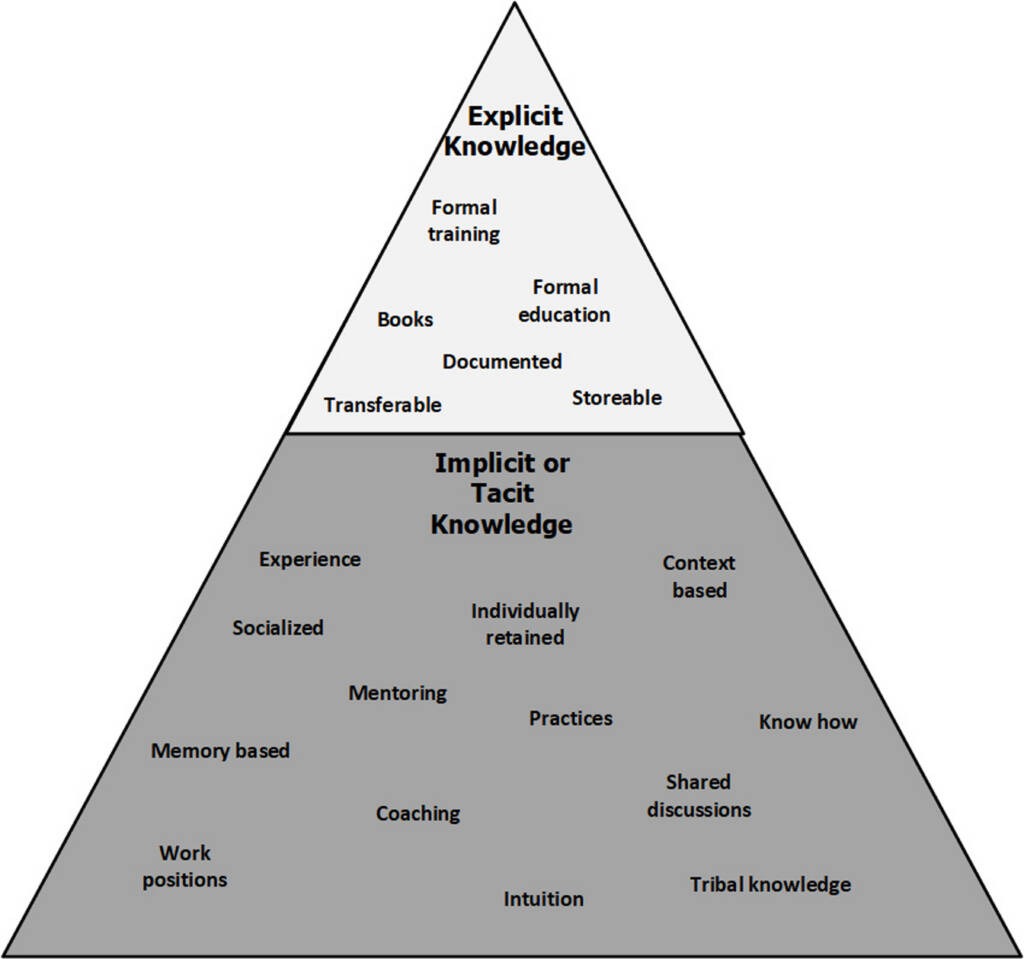 ful information, but they do not show whether uncertainty is being reduced.
The team should also examine:
- Number of critical assumptions remaining
- Requirements with objective verification evidence
- High-risk failure modes without effective controls
- Open interface issues
- Test failures awaiting root-cause determination
- Engineering changes caused by late discovery
- Prototype questions answered per cycle
- Production risks closed before tooling or launch
- Lessons incorporated into specifications and standards
These measures are not meant to punish teams for finding problems. Finding a problem early is often evidence that the process is working. The concern should be repeated failures without learning, hidden results, unresolved causes, or continued commitment despite weak evidence.
Transparency matters. Leaders need an honest view of what is known, what remains uncertain, and what evidence supports the next decision.
Establish a Practical Product Realization Cadence
The design-build-test-learn loop does not require constant meetings or excessive documentation. It requires discipline around a few important questions.
At the beginning of each cycle, define:
- What do we need to learn?
- Why does that knowledge matter?
- What is the fastest credible way to obtain evidence?
- Which product configuration will be evaluated?
- Who must participate in reviewing the result?
- What decision will the evidence support?
At the end of the cycle, determine:
- What did we expect?
- What actually happened?
- Why was there a difference?
- What did we learn?
- Which controlled documents or plans must change?
- What is the next most important uncertainty?
This cadence transforms prototyping and testing from disconnected technical tasks into a repeatable management system for reducing risk.
From Activity to Evidence
The strongest product-development organizations are not those that avoid every mistake. They are the organizations that expose incorrect assumptions early, learn quickly and incorporate that knowledge before committing additional time and capital.
Effective product realization connects engineering, prototyping, testing, manufacturing, quality and project leadership in one evidence-driven system. Design identifies the questions. Building makes those questions observable. Testing produces evidence. Learning improves both the product and the process.
Then the loop begins again—at a higher level of maturity and with less uncertainty.
Design. Build. Test. Learn.
That is not simply a development sequence. It is the engine that turns an idea into a reliable, manufacturable and valuable product.

For more information, contact us:
The Value Transformation LLC store.
Follow us on social media at:
Amazon Author Central https://www.amazon.com/-/e/B002A56N5E
Follow us on LinkedIn: https://www.linkedin.com/in/jonmquigley/
https://www.linkedin.com/company/value-transformation-llc
Follow us on Google Scholar: https://scholar.google.com/citations?user=dAApL1kAAAAJ
