


Expanding Expert Capacity Without Lowering Standards
The engineering skills gap is not simply a recruiting problem. It is a capacity, knowledge, and leadership problem.
 Organizations need experienced engineers who can connect requirements, architecture, design, manufacturing, testing, quality, suppliers, and customer expectations. However, that experience cannot be created immediately, purchased through software, or replaced by artificial intelligence. It develops through years of decisions, failures, experiments, reviews, and lessons learned.
The leadership challenge is therefore larger than filling open positions. Engineering leaders must design systems that use scarce expertise wisely, develop less-experienced people deliberately, preserve knowledge, and apply automation where it increases—not imitates—engineering capability.
The Engineering Skills Gap Is More Than a Headcount Problem
When an engineering organization falls behind, the first assumption is often that it needs more people. Sometimes it does. However, adding people does not automatically increase productive capacity.
I’m reminded of the adage: 9 women pregnant for one month each cannot have a baby
New engineers require onboarding, access to information, clear assignments, technical guidance, and timely decisions. If the organization lacks these supporting conditions, every additional hire may increase the coordination burden placed on the same few experienced people.
The shortage is frequently concentrated in specific capabilities:
- Systems thinking
- Requirements development
- Architecture and interface management
- Embedded systems integration
- Design and process FMEA
- Verification and validation
- Configuration and change management
- Supplier technical development
- Manufacturing-process design
- Root-cause analysis
- Regulatory and standards knowledge
These capabilities are difficult to develop through classroom instruction alone. They require supervised experience and exposure to real consequences.
Engineering leadership during a skills shortage begins by identifying exactly where expertise is limited. A general statement such as “we need more engineers” is not sufficiently precise. Leaders need to know which decisions, reviews, and technical activities depend on scarce knowledge.
Stop Using Experts as Organizational Shock Absorbers
In many companies, experienced engineers become the default solution for every problem. They attend every meeting, review every change, investigate every failure, answer repeated questions, and rescue poorly defined work. I realize saying this runs contrary to my financial stability since I am part of the consultant class. However, our team takes an approach in consulting that transfers what we know and how we set about learning what might actually be true. In this way, we are experts, but a significant part of our effort is to transfer the skills.
This may keep the organization functioning temporarily, but it gradually consumes the capacity needed for higher-value technical work. Experts spend their days reacting instead of developing architecture, reducing risk, mentoring others, or improving the engineering system.
Leaders should examine where expert time is being consumed:
- Are experts answering the same questions repeatedly?
- Are they correcting incomplete requirements?
- Are they searching for information that should be readily available?
- Are they being pulled into meetings without a defined technical decision?
- Are they reviewing work too late, after major commitments have been made?
- Are they compensating for weak change control or unclear ownership?
A skills shortage becomes more damaging when poor processes waste the expertise the organization already has.
 Redesign Engineering Work Around Decisions and Risk
Better work design can expand engineering capacity without lowering standards. Start by separating activities by technical risk, complexity, and the level of judgment required.
Not every task requires the most experienced engineer. However, do not delegate high-consequence decisions simply because an expert is unavailable.
Reserve Expert Attention for High-Leverage Work
Experienced engineers should concentrate on work such as:
- System architecture and critical interfaces
- Safety-related requirements
- High-risk failure modes
- Design and process tradeoffs
- Verification strategy
- Root-cause analysis of complex failures
- Technical supplier selection
- Configuration baselines
- Decisions that are expensive or difficult to reverse
More repeatable activities can be structured for execution by developing engineers, technicians, analysts, or automated systems—with appropriate review points.
The objective is not to create rigid job boundaries. It is to ensure that expert judgment is applied where its absence creates the greatest risk.
Make Assignments Easier to Understand
Ambiguous work consumes engineering capacity. A request such as “look into this problem” often produces unnecessary investigation, duplicate effort, and unclear conclusions. I have a story about this, because of course I do.
I was leading a project and carried out engineering work. Two vehicle brand platforms required cross-functional system specifications. I took the less-known platform, and a senior engineer took on writing these specifications. He had the title; he was assigned to the project, so I assumed he had the requisite skills and was sufficiently motivated. I verbally explained the structure and typical approach for making something usable for the software engineers. That failed. I created a template for him to work from for the second attempt, with example content. That failed, and we went to the manager, where I found out he did not want to be part of the project. Now we are behind schedule. I had to hunt down an available systems engineer. Thank you, Wes, and of course, work stupid hours to catch things back up, see more on this at To the Chief(s) Part 1 and Part 2.
A better assignment identifies:
- The decision that must be made
- The question or hypothesis being investigated
- Known evidence
- Applicable requirements
- Constraints and assumptions
- Expected deliverables
- Required reviewers
- The date the decision is needed
Clarity reduces iteration caused by misunderstanding while preserving iterations that generate useful learning.
Mentoring Must Be Built Into the Work
Mentoring is often treated as something experienced engineers should do when time permits. During a skills shortage, time rarely permits.
If mentoring depends entirely on personal initiative, it becomes inconsistent and is usually sacrificed when schedules tighten. The organization then remains dependent on the same experts while less-experienced engineers receive limited opportunities to develop judgment.
Effective mentoring should be connected to actual engineering activities:
- Joint requirements reviews
- Paired design analysis
- FMEA facilitation
- Test-plan development
- Failure-investigation reviews
- Supplier technical assessments
- Design-release decisions
- Post-test and after-action reviews
This lets developing engineers observe how experienced people frame problems, challenge assumptions, assess incomplete evidence, and make decisions.
Mentoring should also include the reasons behind a decision. Knowing what was decided is useful. Understanding why alternatives were rejected is how engineering judgment grows.
Convert Experience Into Reusable Knowledge
Much of an organization’s engineering knowledge exists in fragmented forms: email threads, meeting notes, spreadsheets, test reports, personal files, and the memories of a few individuals.
When this knowledge is difficult to find, engineers repeat analyses, reopen settled questions, and reproduce earlier mistakes. The engineering skills gap widens because every problem must be solved as though the organization is encountering it for the first time.
Reusable engineering knowledge may include:
- Design standards and technical guidelines
- Interface definitions
- Lessons learned
- Failure-mode libraries
- Test methods and acceptance criteria
- Design-review checklists
- Approved calculation methods
- Supplier-performance history
- Known manufacturing limitations
- Decision logs
- Reference architectures
- Examples of successful and unsuccessful designs
Documentation alone is not enough. Knowledge must be organized, searchable, maintained, and connected to the work where it will be used.
A hundred-page lessons-learned document stored on a shared drive is technically available but may be operationally invisible.
Use Automation to Expand Capacity, Not Pretend to Replace Experience
Automation and artificial intelligence can help reduce the engineering skills gap, but only when leaders are honest about what these tools can and cannot do.
Automation is useful for activities involving search, comparison, formatting, routine analysis, traceability, and pattern detection. Examples include:
- Comparing requirements or drawings between revisions
- Detecting inconsistencies across documents
- Generating initial checklists
- Organizing test results
- Identifying missing traceability links
- Drafting routine reports
- Summarizing historical failure information
- Searching lessons learned
- Flagging unusual measurements
- Supporting configuration audits
These applications reduce administrative effort and allow engineers to spend more time on interpretation and decisions.
However, an AI-generated answer is not engineering evidence. It may overlook context, misunderstand constraints, or produce a confident response based on incomplete information. Outputs must be verified against requirements, physical evidence, standards, calculations, and test results.
Engineering leaders should establish clear rules for:
- What information may be entered into AI systems
- Which tasks may use automated assistance
- Who reviews generated content
- How sources and assumptions are recorded
- What evidence is required before a decision
- Which decisions remain under accountable human authority
Automation can increase the reach of expertise. It cannot assume responsibility for the consequences of engineering.
Create Short Learning Cycles
Organizations sometimes attempt to compensate for limited experience by adding more reviews, approvals, and documentation. This can slow work without necessarily improving decisions.
A stronger approach is to create short, evidence-based learning cycles:
- Define the question or risk.
- State the working hypothesis.
- Select the smallest meaningful test or analysis.
- Collect and review the evidence.
- Update the design, requirement, process, or plan.
- Record what was learned.
Prototype builds, simulations, bench tests, design experiments, and manufacturing trials can expose assumptions before they become expensive commitments.
Iterations are not automatically rework. Planned iterations create knowledge. Uncontrolled iterations caused by vague requirements, poor communication, or missing configuration control are rework.
Good engineering leadership distinguishes between the two.
Measure Whether Engineering Capacity Is Actually Improving
Leaders should not evaluate the response to a skills shortage by counting hires or training hours alone. They should measure whether the organization is becoming more capable.
Useful indicators include:
- Time required to reach technical decisions
- Percentage of reviews completed with the correct participants
- Requirements defects discovered after design release
- Repeated failure modes
- Engineering changes caused by preventable omissions
- Test failures traced to unclear requirements
- Time experts spend on recurring questions
- Percentage of critical knowledge captured and reused
- Number of people qualified to perform essential activities
- Time required for a developing engineer to work independently
These measures show whether capability is expanding or whether the organization remains dependent on individual heroics.
Leadership Determines Whether Scarcity Becomes a Crisis
The engineering skills gap cannot be solved overnight. Experienced engineers require years to develop, and no tool can instantly reproduce the judgment gained through product launches, failures, supplier problems, testing, and production experience.
However, leaders can prevent the shortage from becoming an organizational crisis.
They can clarify work, protect expert capacity, create structured mentoring, capture reusable knowledge, shorten evidence cycles, and apply automation responsibly. These actions do not eliminate the need for experienced people. They enable those people to influence more work while developing the next generation of technical capability.
The goal is not to ask fewer people to work harder. It is to build an engineering system in which knowledge travels, decisions occur at the appropriate level, and every project contributes to greater organizational capability.
That is how engineering leadership turns scarce experience into expanding capacity.
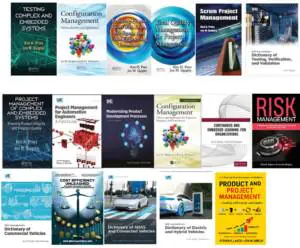

For more information, contact us:
The Value Transformation LLC store.
Follow us on social media at:
Amazon Author Central https://www.amazon.com/-/e/B002A56N5E
Follow us on LinkedIn: https://www.linkedin.com/in/jonmquigley/
https://www.linkedin.com/company/value-transformation-llc
Follow us on Google Scholar: https://scholar.google.com/citations?user=dAApL1kAAAAJ
